
How to pack 50 food buckets with your friends
Hey all, sorry about the lack of an update last week. I was a bit crunched getting ready for the Emergency Food Bucket event, and the newsletter went by the wayside. The good news is that the event went swimmingly, so let's get into the details.
Warning: we're going to get WAY into the details, because this post is basically my first draft of a "how to do this" toolkit that I want to be able to offer other communities interested in replicating the project. Feel free to skim where appropriate.
Step 0: Preparation
This includes everything we did behind the scenes in the ~month leading up to the event. Some of it has been covered in the newsletter before, but I wanted to make sure we got it all in one place
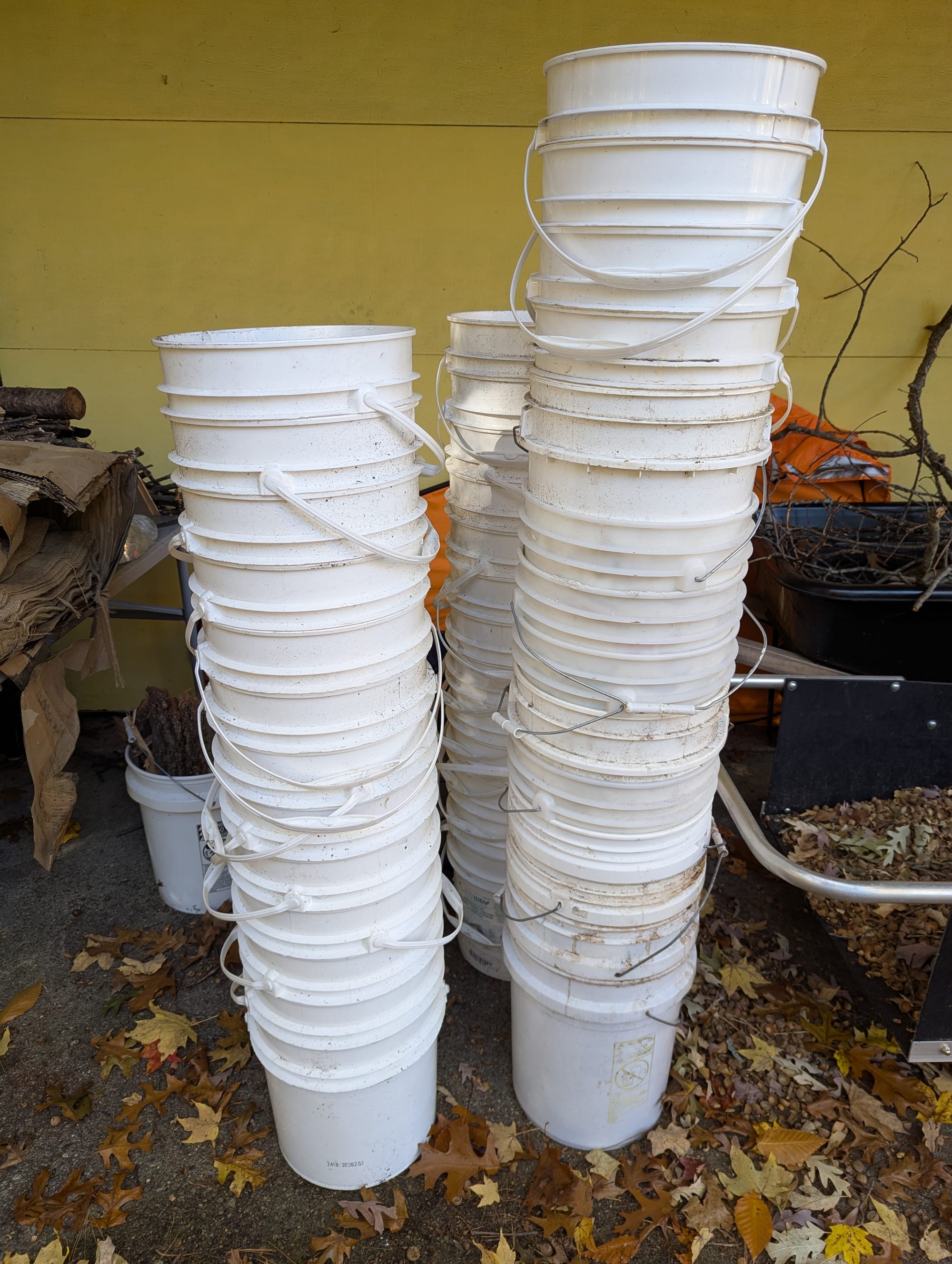
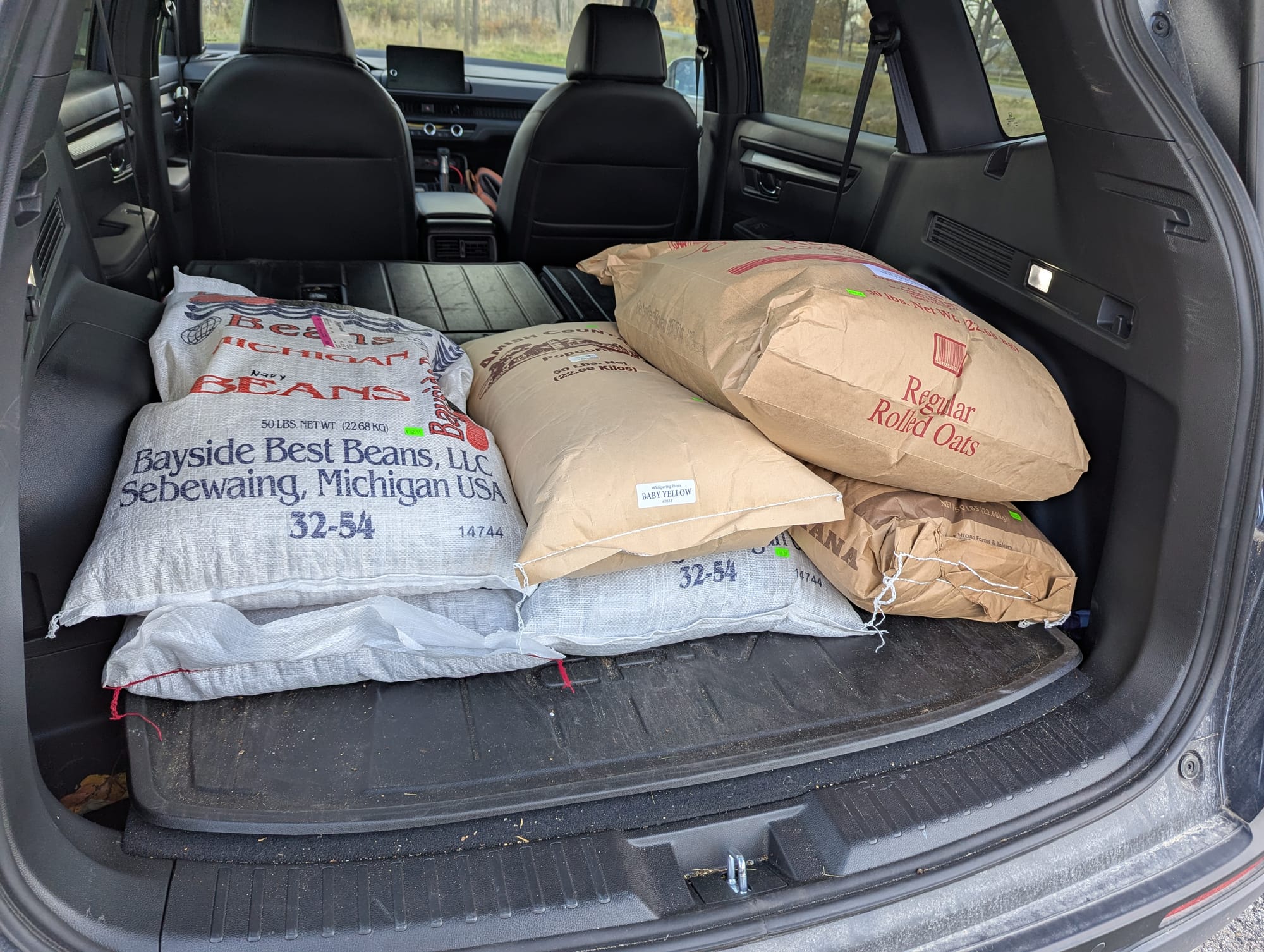
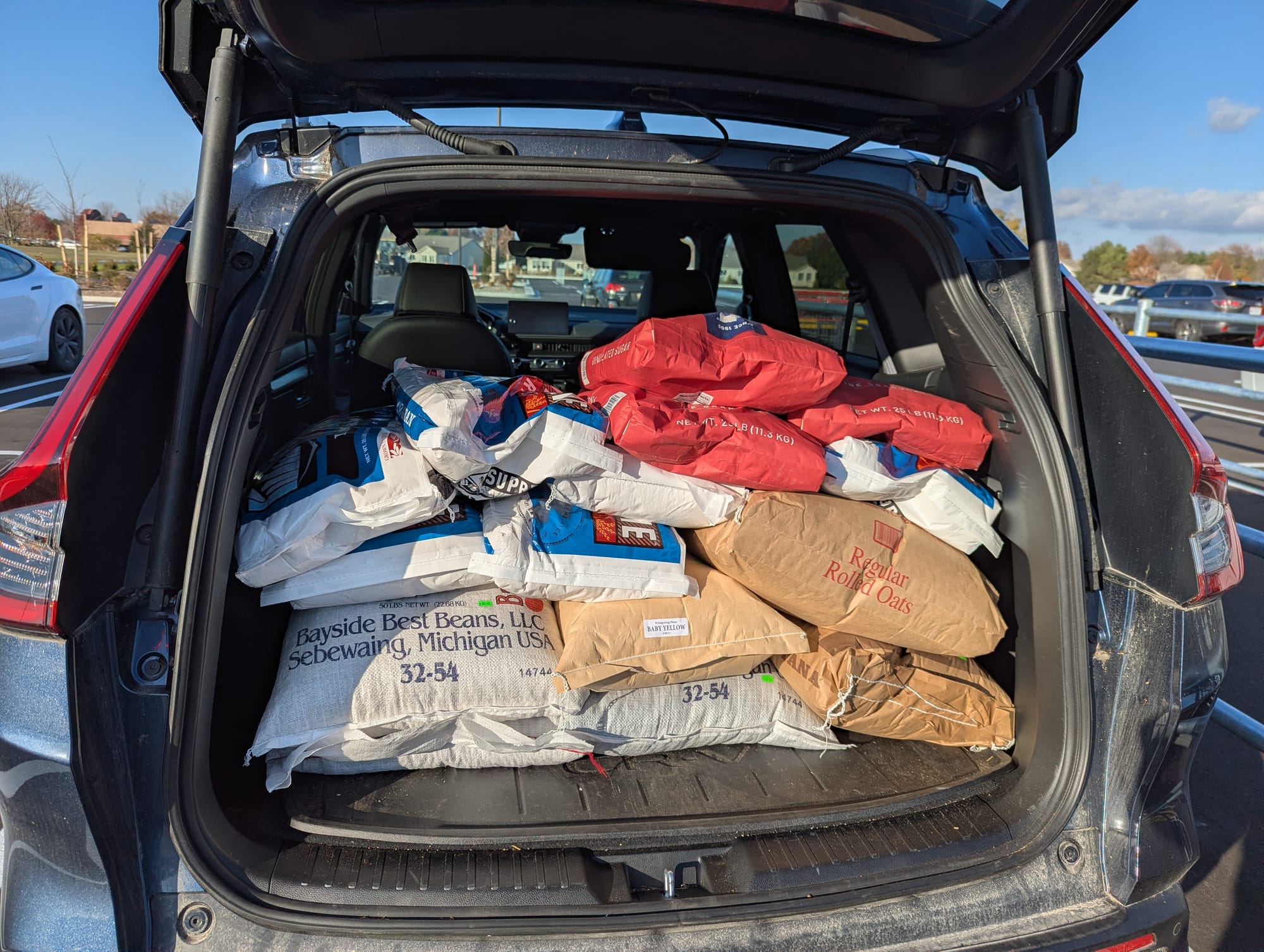
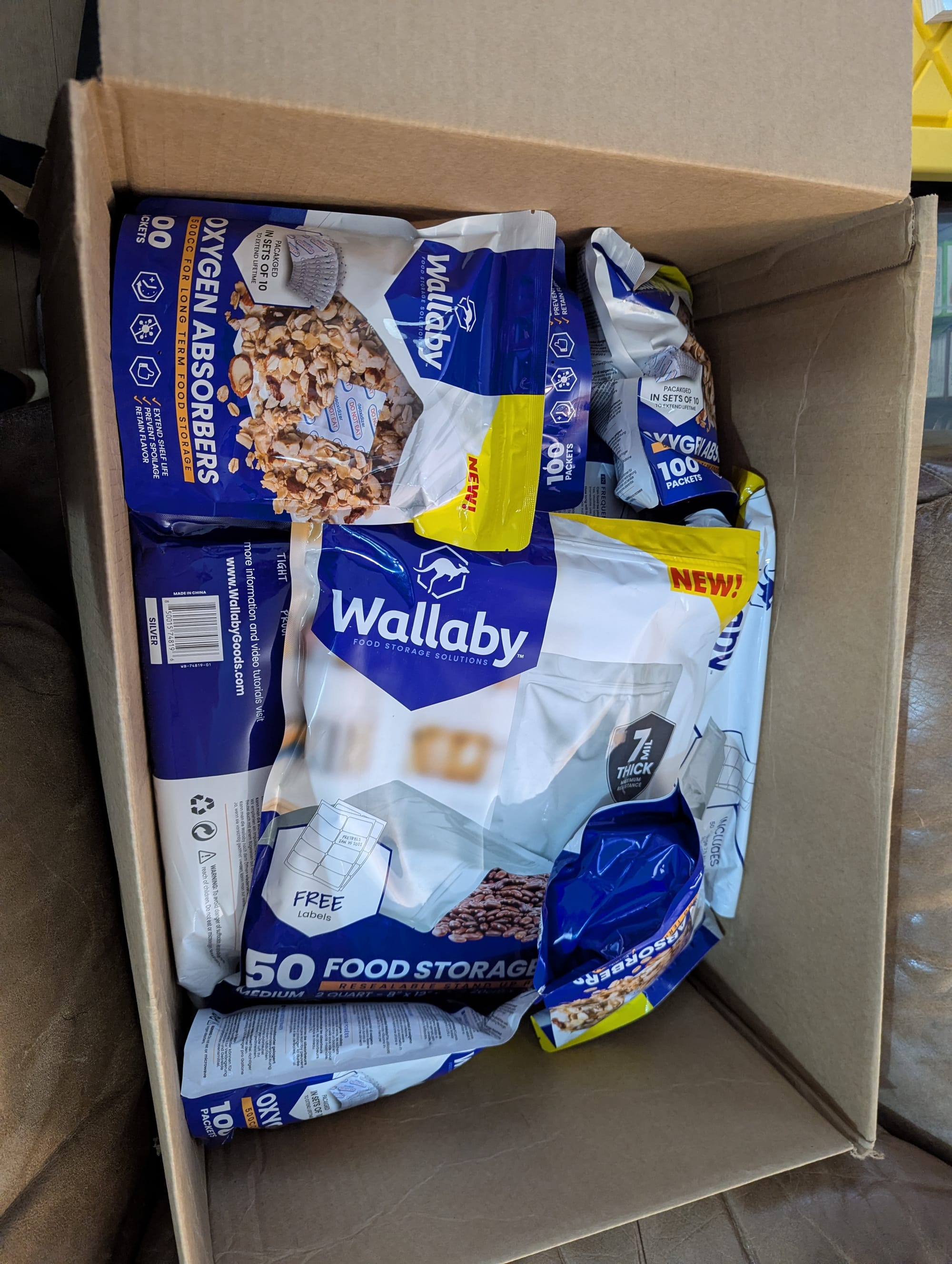
The first week or so of this project was me looking stuff up, making spreadsheets, and doing a bunch of math to figure out what supplies we were going to need. This was the shopping list I came up with:
- 1x50lb bag of black beans
- 1x50lb bag of navy beans
- 1x50lb bag of red beans
- 1x50lb bag of lentils
- 2x50lb bags of wheat berries
- 2x50lb bags of rolled oats
- 2x50lb bags of popcorn kernels
- 6x50lb bags of white rice
- 3x50lb boxes of bulk pasta
- 1x50lb bag of powdered milk
- 3x50lb bags of sugar
- 3x40lb bags of potato flakes
- 1x50lb bag of salt
- Mylar bags in the following sizes:
- 150 gallon-sized bags
- 150 half-gallon bags
- 50 pint bags
- 400 quart bags
- Oxygen absorbers in the following sizes:
- 250 x 500cc absorbers
- 500 x 300cc absorbers
- 100 sheets of label paper
- 30 Costco totes
- 50 x 5-gallon buckets
Nate and I spent the past couple of months gathering up supplies with the assistance of the community, and we packed them up in Costco bins so that each bin had 50lbs of food, the bags and labels needed to package up that food, and an instruction sheet for packaging and distributing it. We got most of the food at Whispering Pines or Costco, though we're hoping to partner with Montague Foods for future events like this.
Step 1: Setup
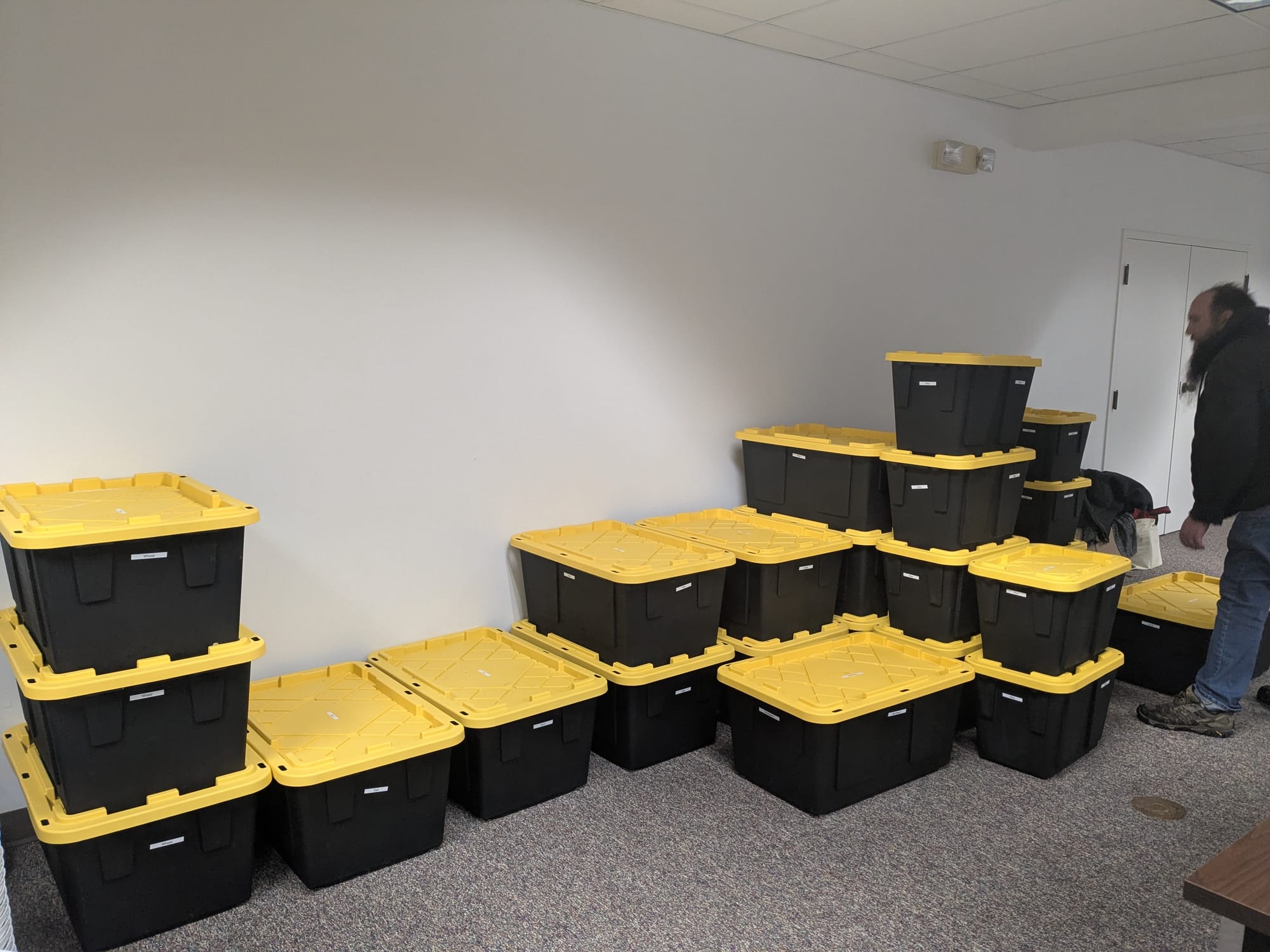
The first step once the doors opened on Friday was to bring our 30+ bins of food and supplies down from the storage unit. Luckily, we had a huge setup crew signed up, and many hands made light work. As we brought them in, we tried to group the bins by food type so that we could minimize cross-contamination as we packed stuff into bags.
Step 2: Packing Mylar Bags
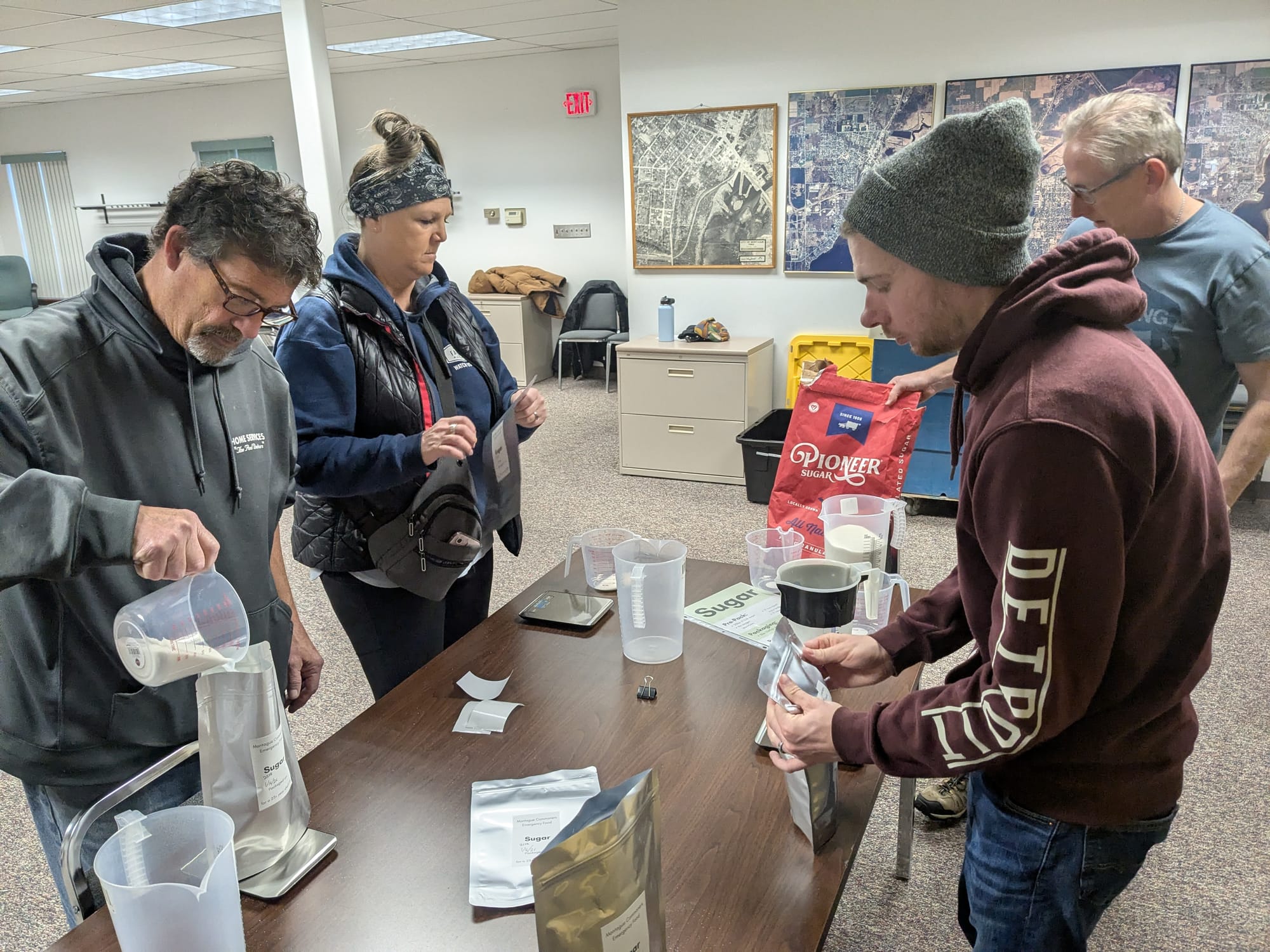
Next, we started portioning out each bag of bulk food into mylar bags. There are a few different steps in this process, and it's always interesting to see groups of volunteers divvy tasks up and work out their own assembly line processes. Exactly what the "optimum" flow looks like is going to vary depending on how many people are helping and what their strengths are, but here are the basic tasks that need to be done:
- Putting the label on the bag
- Writing or stamping the date on the bag
- Opening the bag up so it's ready for food
- Scooping the food out of the big bag
- Measuring the food into the storage bag
- Bringing the filled bags to the sealing station
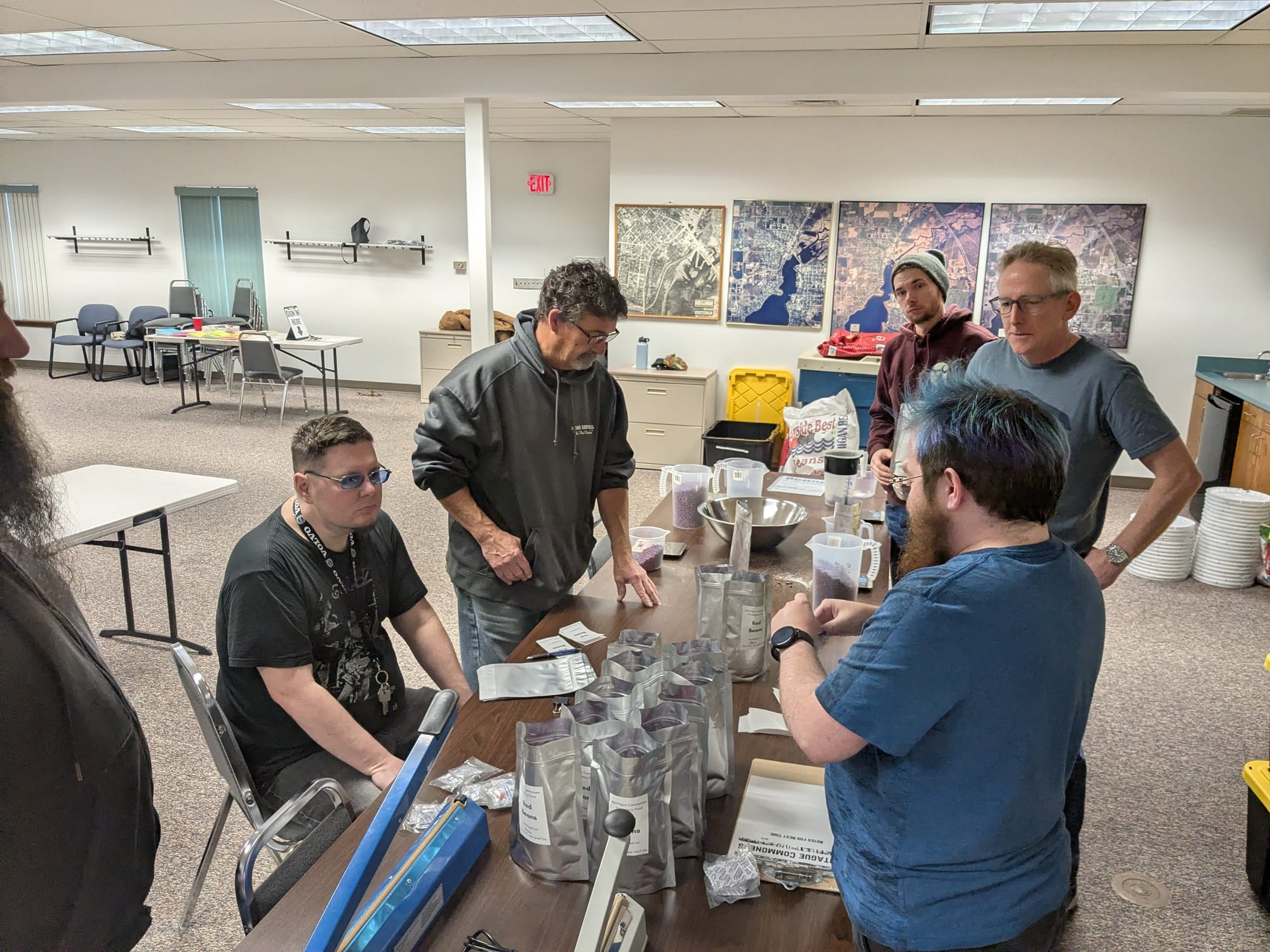
Once we have ten filled bags lined up, it's time for the oxygen absorbers. They come in sealed packs of ten, and they start doing their thing as soon as the seal on the pack is broken. So everybody stops their other tasks, joins in on the official "3...2...1... Oxygen Absorbers!" chant, and races to get the bags zipped closed as quickly as possible once the oxygen absorber goes in. This is one of the steps that makes this MUCH easier as a community project than it would be to do this at home by yourself.
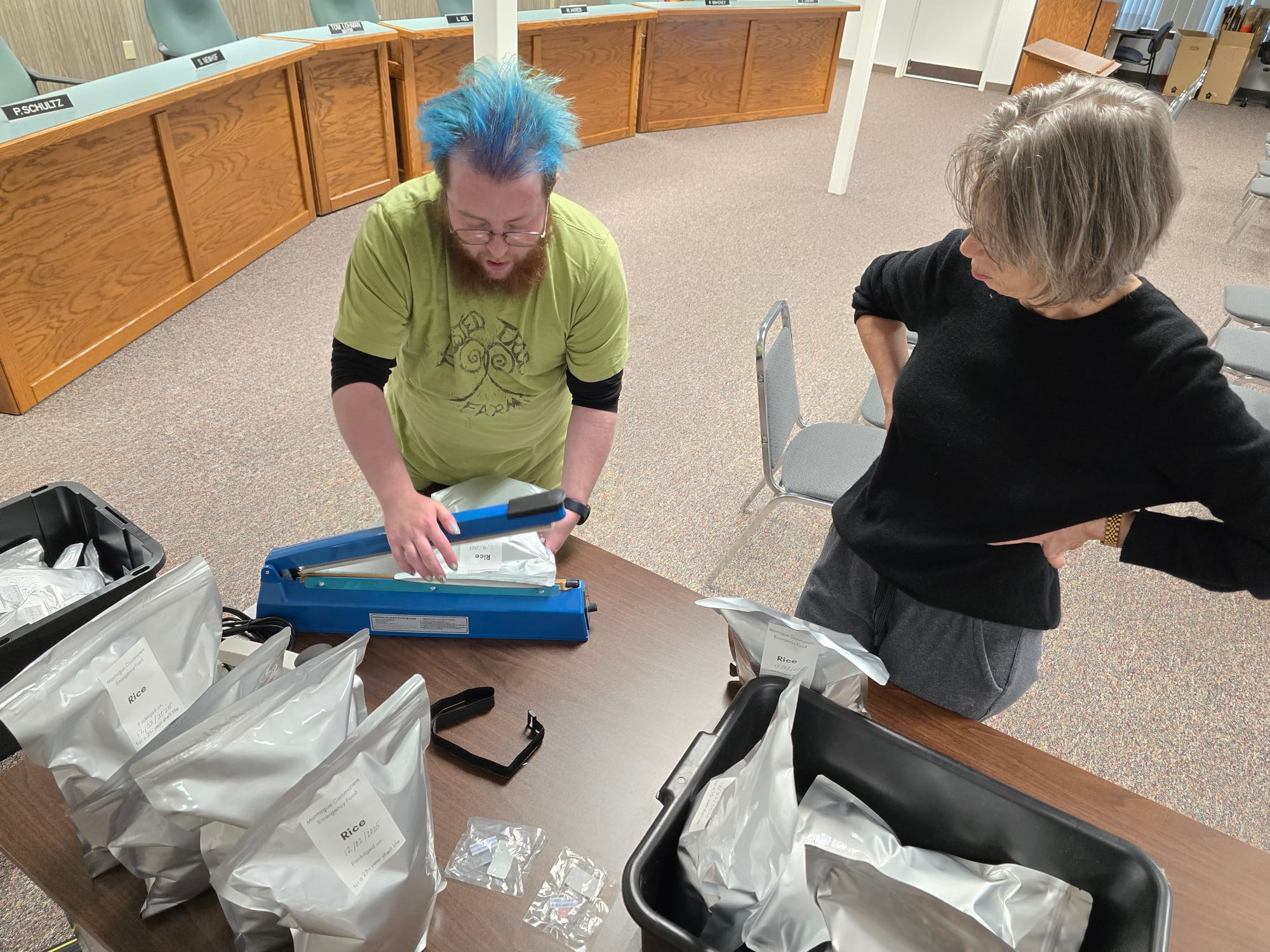
Once the O2 absorbers are in and the bags are zipped up, they get fully sealed for long term storage using an impulse sealer. This is the other reason that it's nice to do this at community scale. Impulse sealers aren't all that expensive, but they're also not something you're going to have a lot of other uses for, and who wants yet another single use appliance hanging around? It has a special heating element designed to heat rapidly to the right temperature to seal a mylar bag and then automatically shut off after a couple of seconds.
Step 3: Packing the Buckets
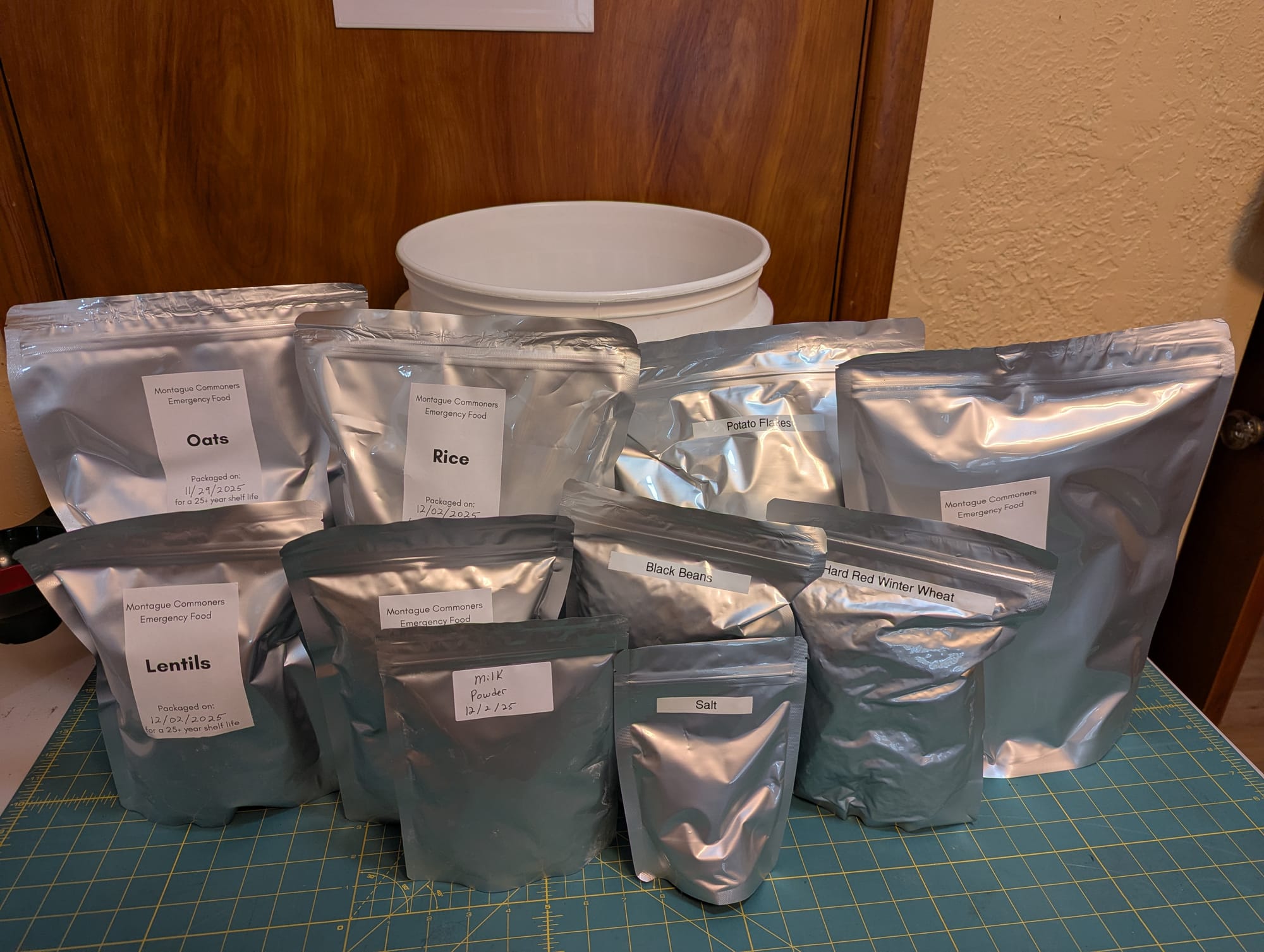
One of the big challenges of this project turned out to be getting all of the different bags to physically fit in the bucket. There are 11 bags in all (the sugar is missing from the picture above), and things like the oats and potato flakes are quite bulky for their weight. For a while, I was worried that we were going to have to split things between two buckets, and keep track of which buckets were which. Luckily, Josh Davis figured out the right combination of folding, arranging, and squishing to get everything to actually fit. 🥳 We were able to replicate his results and got the lids to close on all 50 buckets eventually.
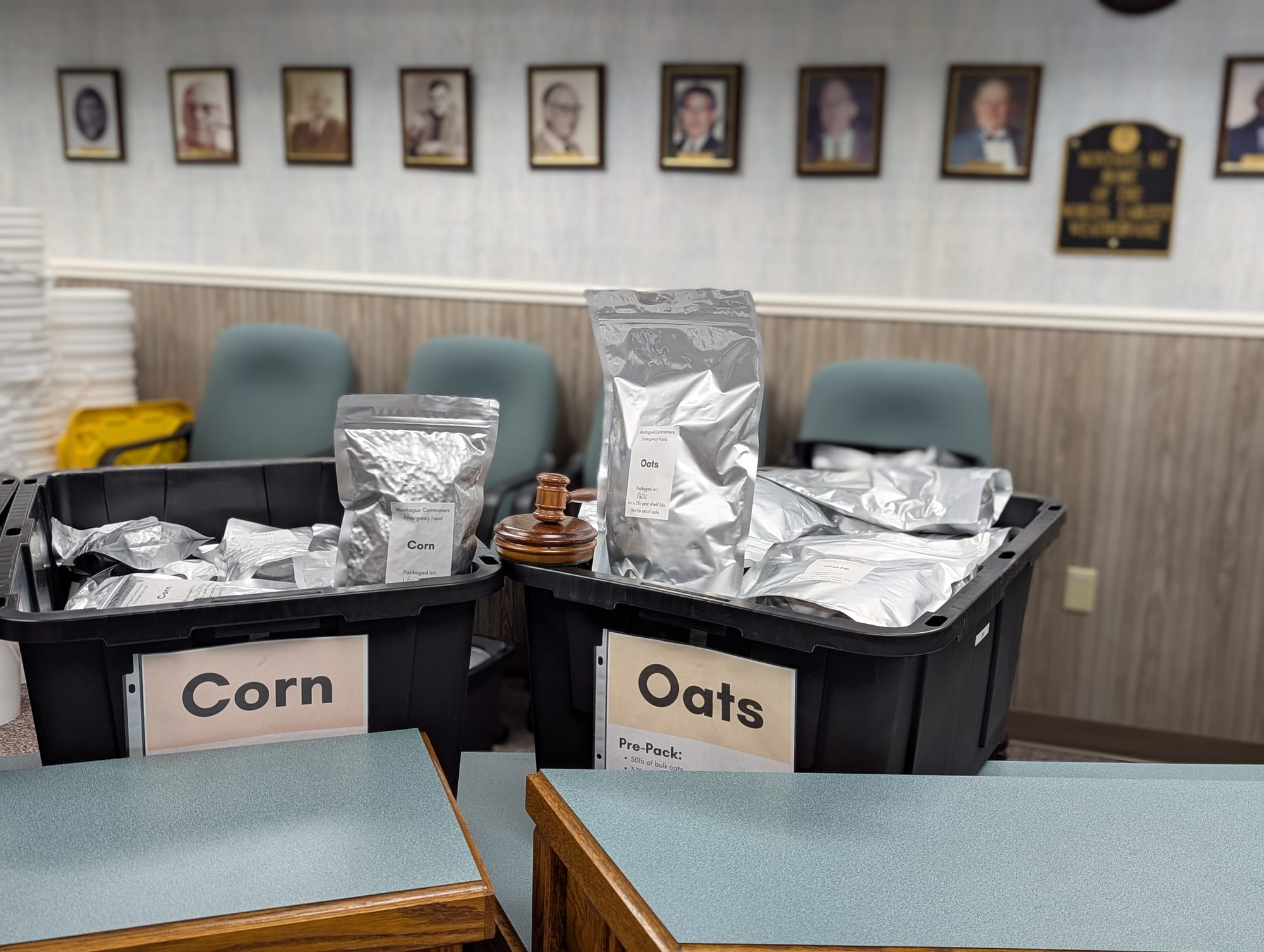
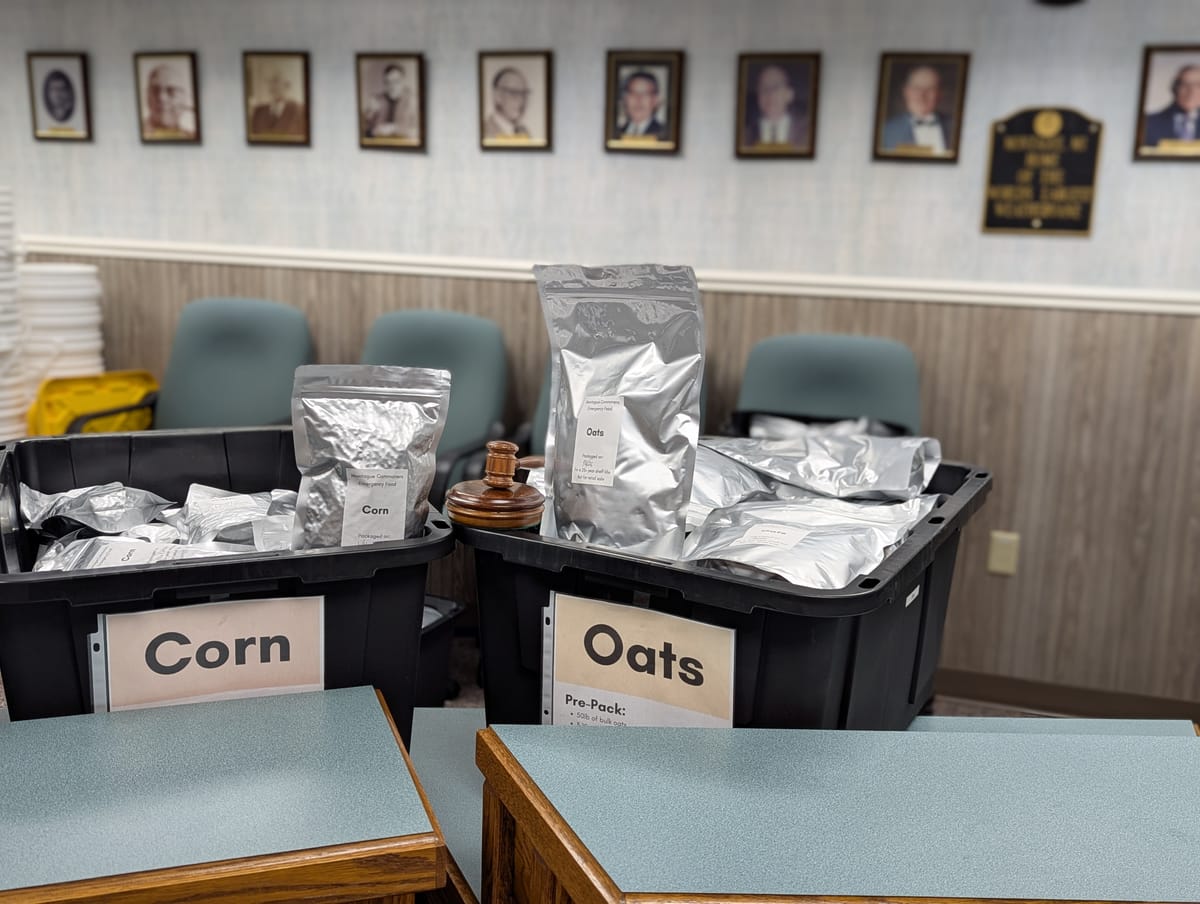
We lined the bins of packed food up along the city council desks, so that we could easily walk down the row and grab a bag from each bin as we packed the buckets. Not so that we could pretend the different staple foods were city council members and concoct elaborate plotlines wherein councilmembers Potato and Salt sought to win the support of the Legume Coalition in their bid to topple the ruling Grain Alliance. It was for grownup reasons. We swear.
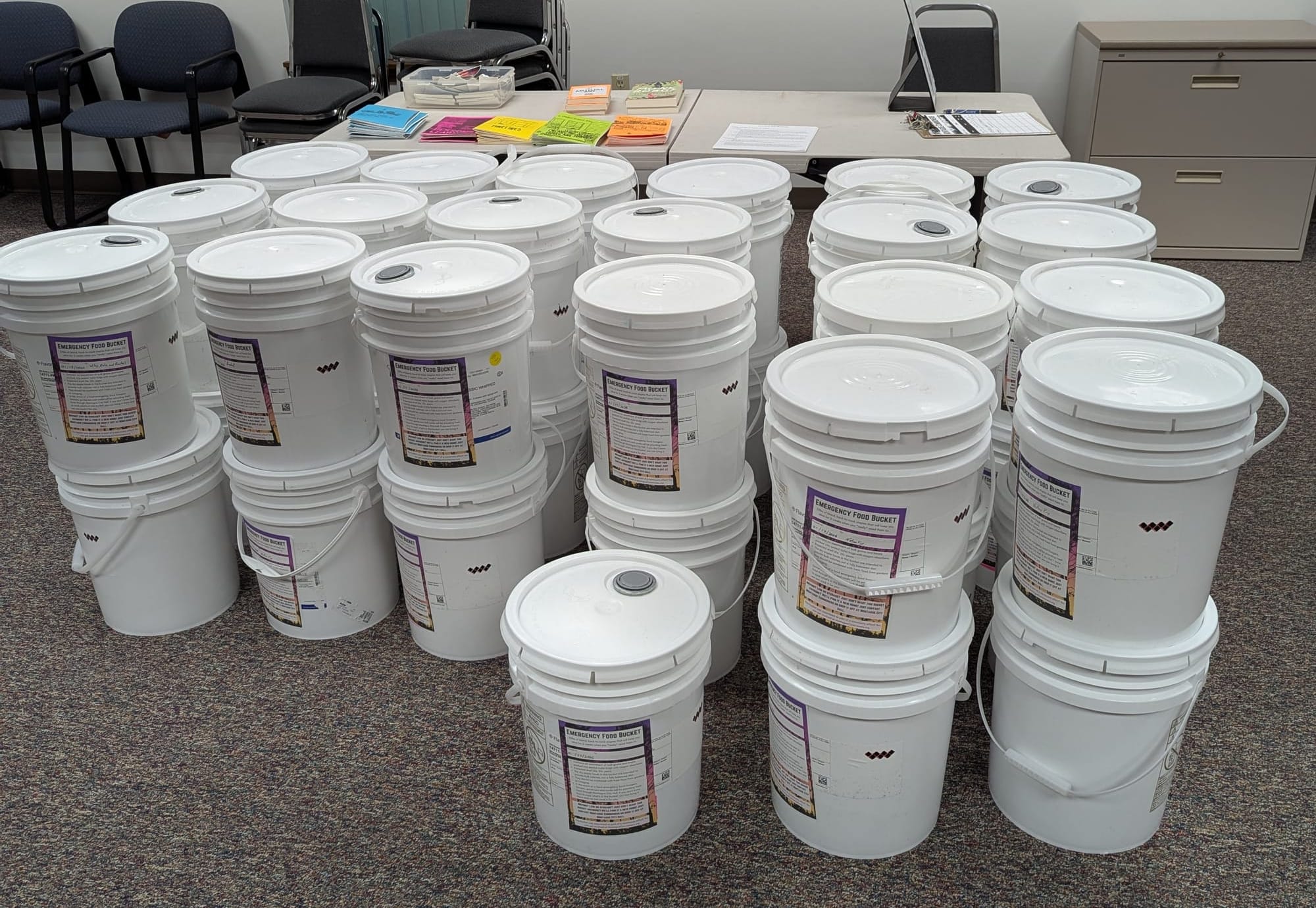
I forgot to take any pictures of the bucket packing process, but imagine these buckets completely stuffed with mylar food bags, and you've got the basic idea. We had to sit on a lot of lids to get them closed 🤣
In the end, we were able to hit our goal of 50 buckets. We ended up having quite a bit of extra rice (I think I left a whole Costco trip off my mental inventory) but since it's now packed up for a 25+ year shelf life, it will definitely keep until next time. And we didn't run short of anything, which was the important thing. Now that we've got the basics down in terms of logistics, we're hoping to figure out a better inventory tracking system before we hold the next event like this. By the time everyone in town has a bucket, we'll have it down to a science.
So where do the buckets go now?
About a dozen of them have already gone home with volunteers. Another dozen are going to stay at City Hall so that they're available for community relief efforts in the event of a disaster. The rest are still available to be claimed. Obviously, it's a little late to sign up for a work shift on this round, but you can sign up for a money-only share to help cover the cost of the food and supplies, and in exchange we will drop off a bucket at your house with no effort required on your part. Anyone with hour tokens left over from the Artisan Market last year can put them towards a 50/50 share ($50 and two hours) or a labor-only share (four hours). And once setup for the Artisan Market starts, we'll have lots of opportunities available to earn more hours.
Solidarity this week: Minnesota
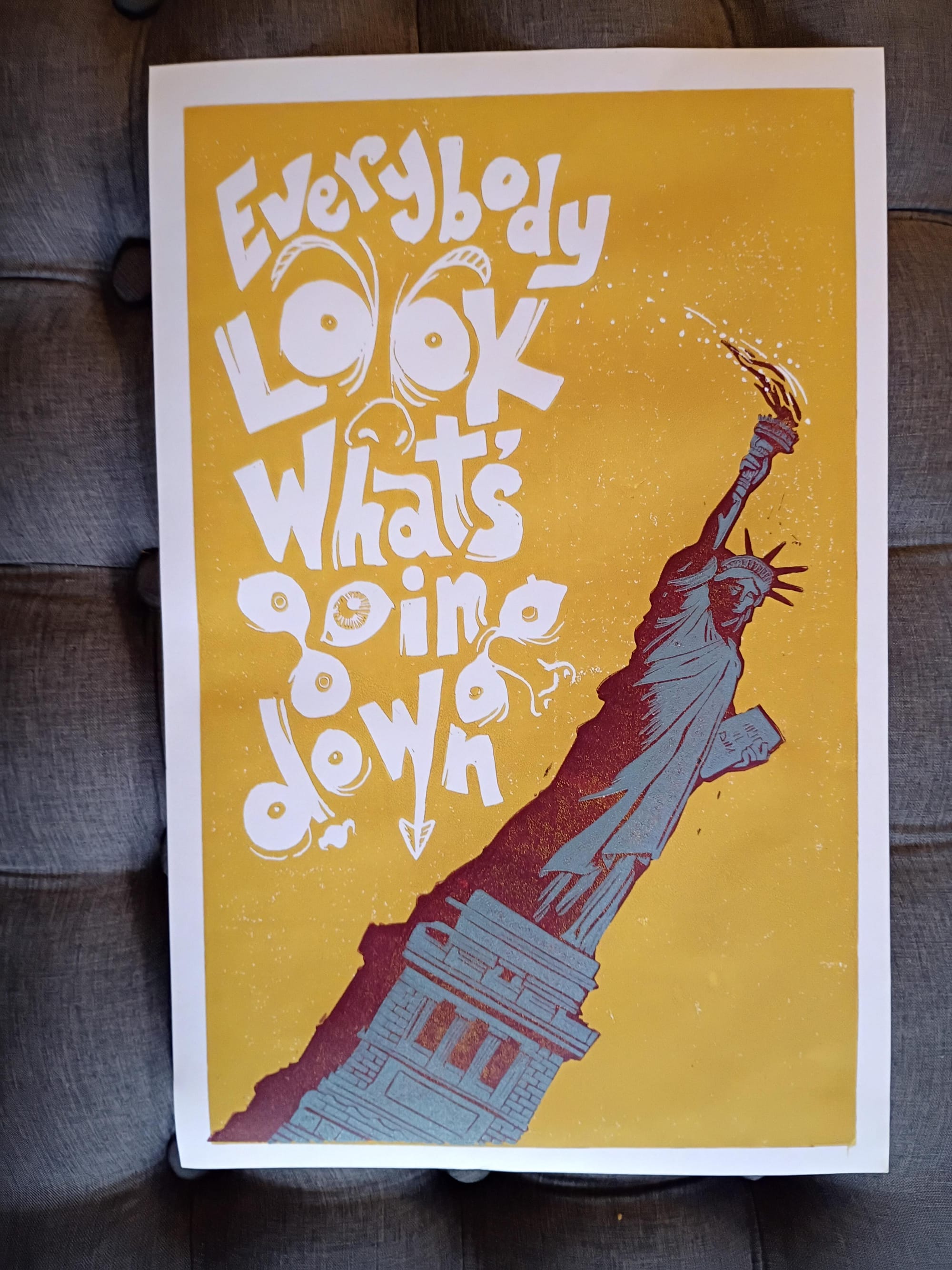
Seeing the brutal images coming out of Minnesota, with US-citizen elders dragged into the snow in their underwear and 5 year olds snatched out of schools, can make it easy to despair. But as Mister Rogers taught us, we can always look for the helpers, and seeing the people of Minnesota mobilize to protect their neighbors has been keeping me going.
Folks in the right-wing media bubble really do seem to have convinced themselves that white people in cities across the country felt terrorized by their non-white neighbors, and would welcome the racist goons descending on their communities as liberators. Instead, people have been organizing in droves to protect their schools, their neighbors, and their communities. (Not to mention make fun of ICE agents from Texas who can't drive in snow. As one commenter observed: "I'd never considered the sheer brutality of getting mocked by someone with a bullhorn and a heavy Minnesota accent."
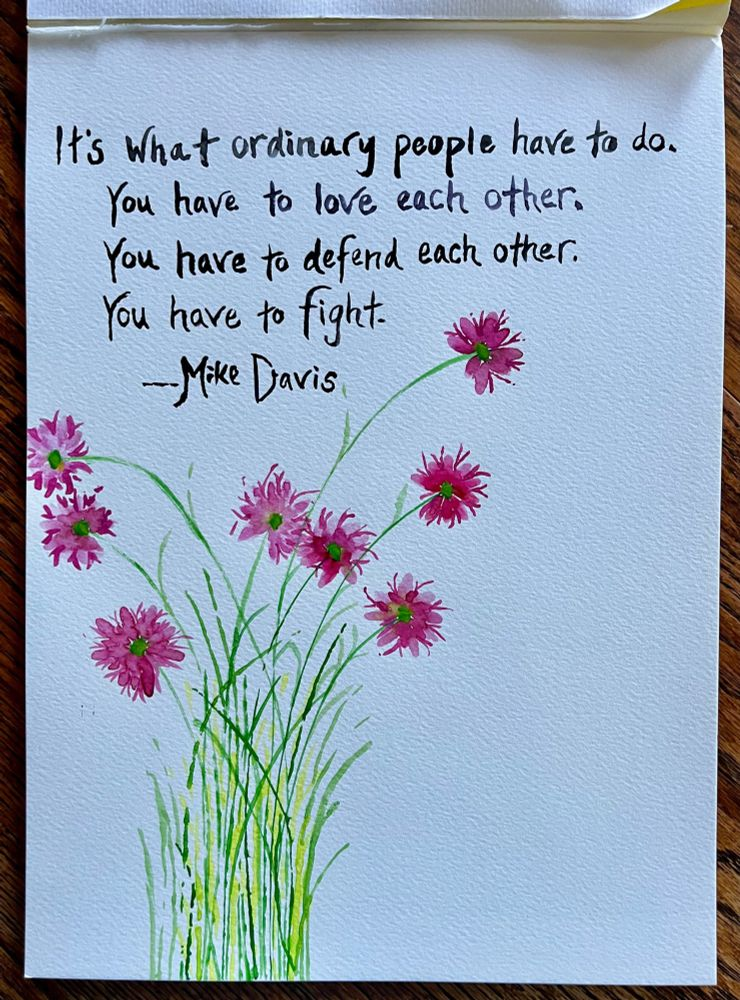
Everyday people who don't think of themselves as political are getting trained as legal observers and rapid response organizers, and it's making a huge difference on the ground. Watching a bunch of heavily armed government agents in full ninja-turtle military cosplay complain about how unfairly they're being treated by soccer moms with whistles is one of the funniest examples of crybully behavior I've seen in my life. Legal observers and street journalists are making sure that ICE abuses are being documented and that no one disappears without a trace.
There are already local folks organizing in case Stephen Miller makes Michigan his next target. They're called Lakeshore RapidResponse to ICE and they're organizing a training in Holland on February 11th. If you're interested in carpooling to the training, let me know and I can put you in touch with other folks from the White Lake area who are planning to go.
This Week's Nails
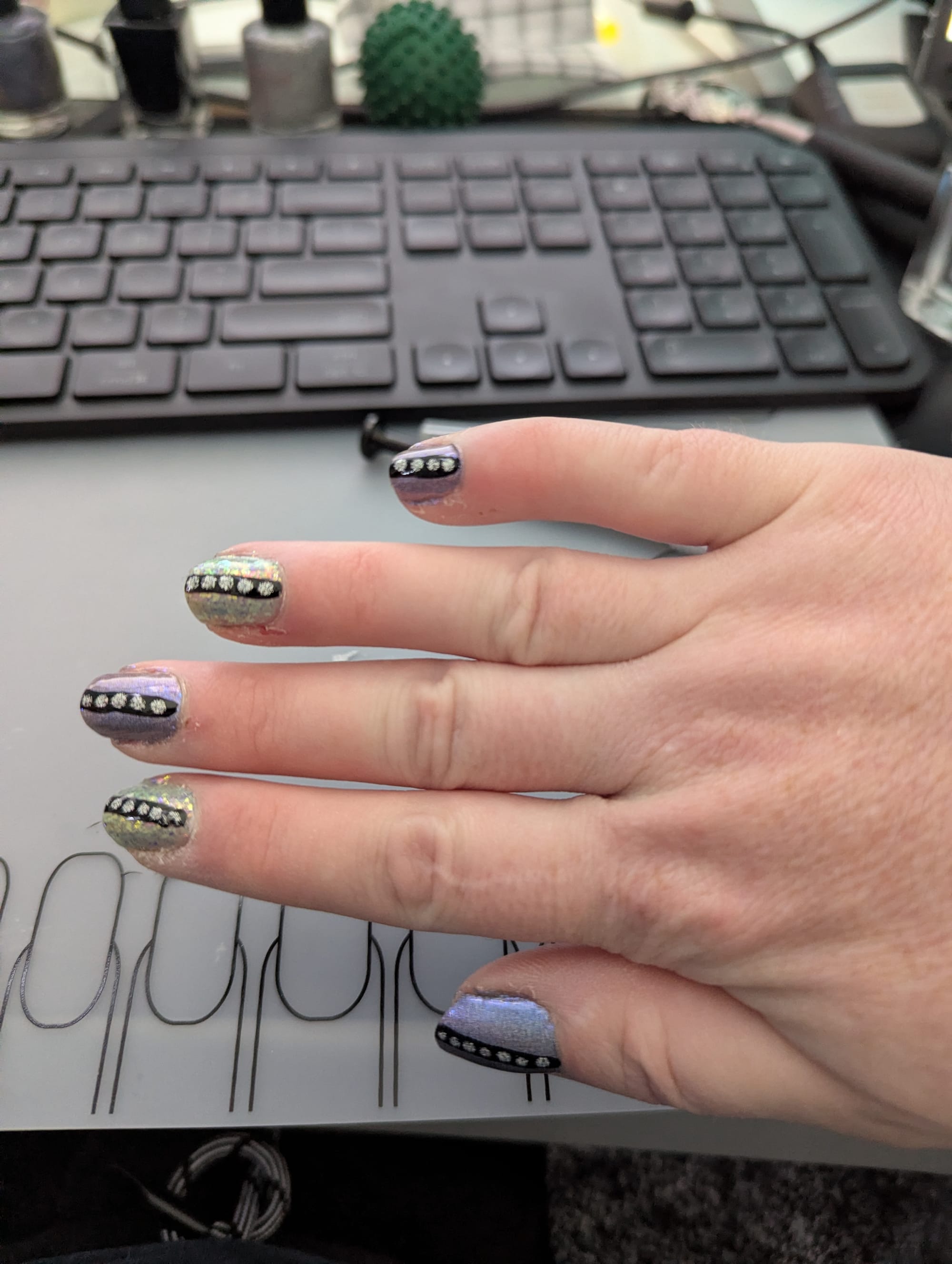
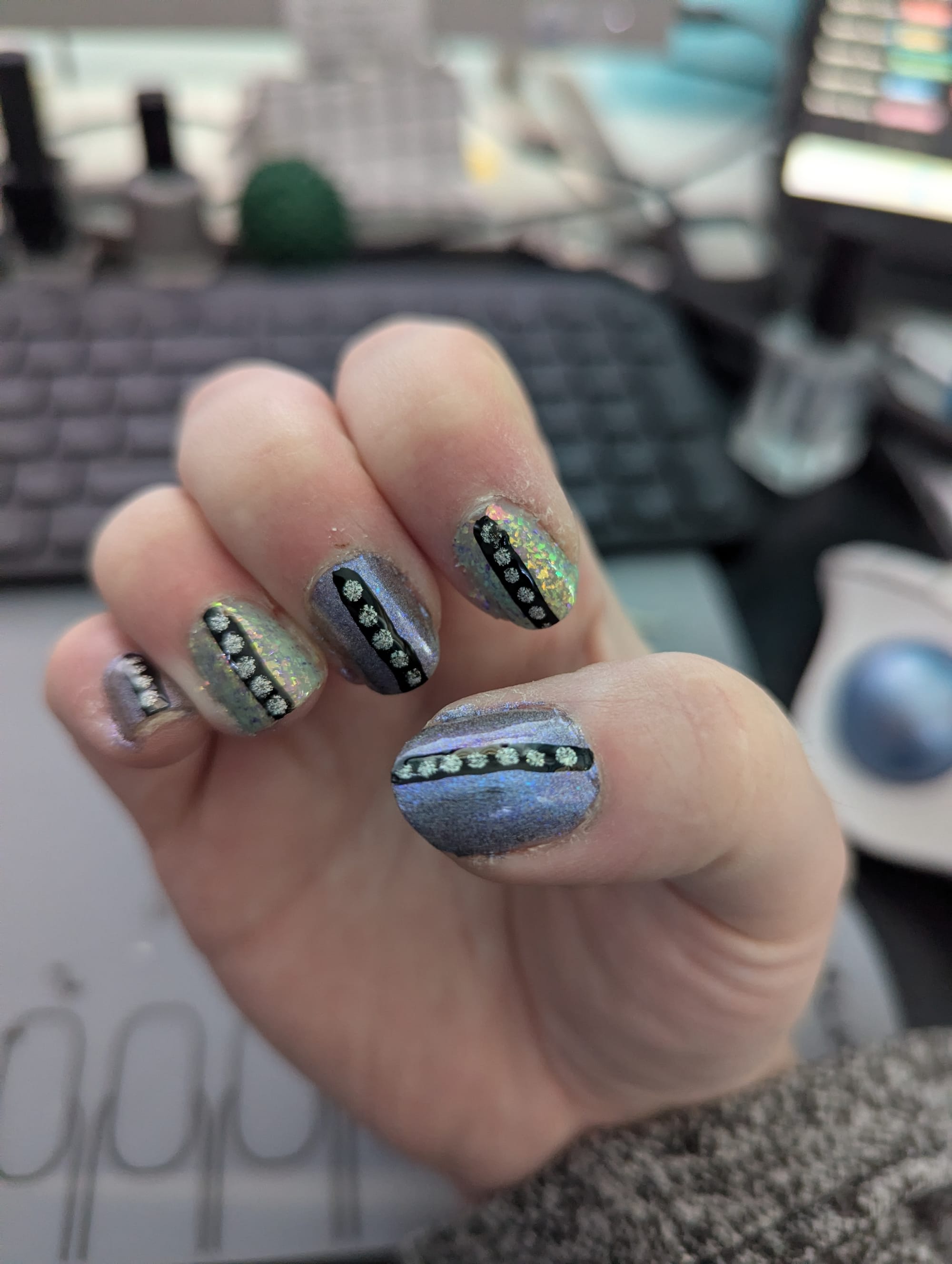
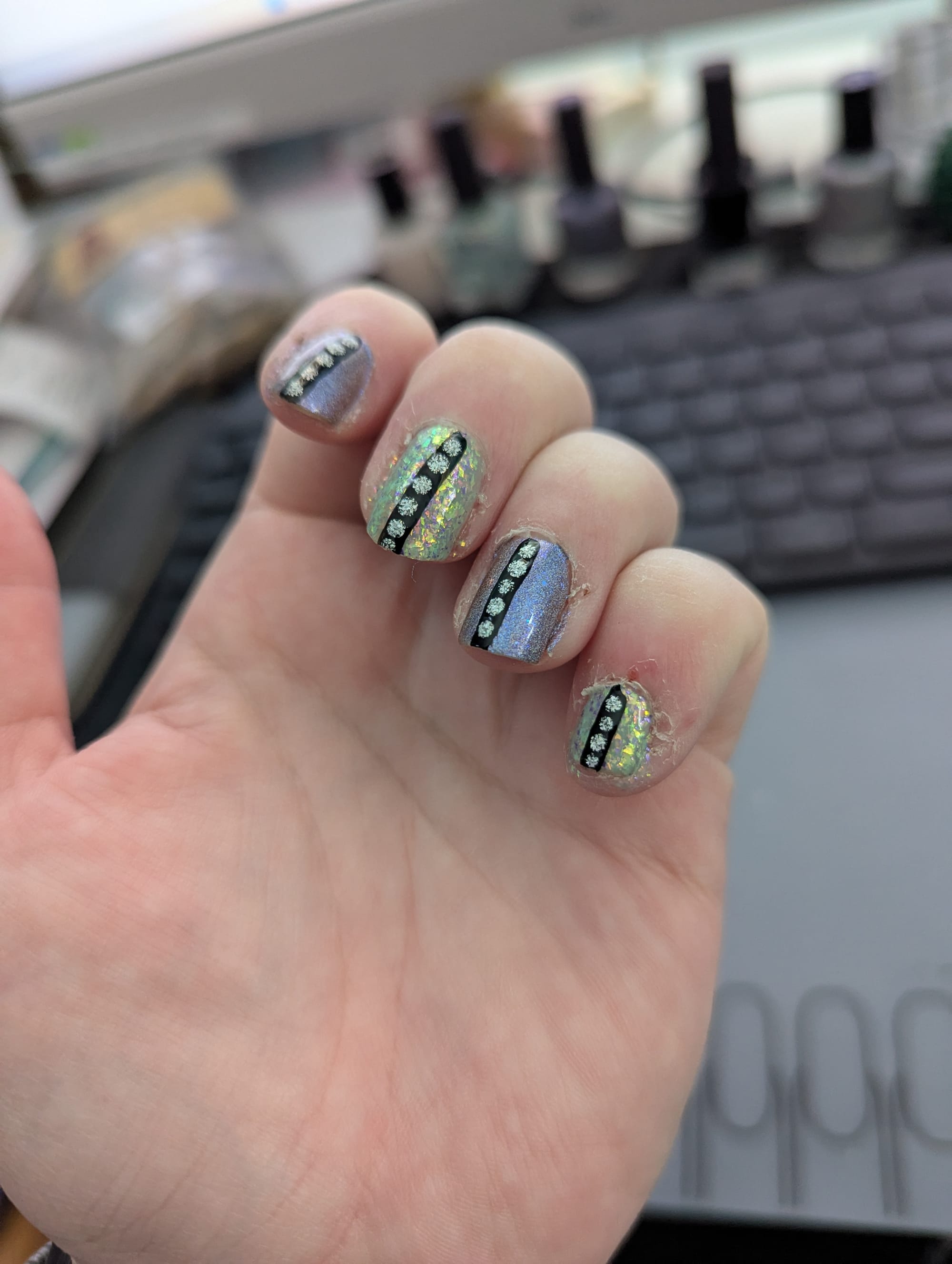
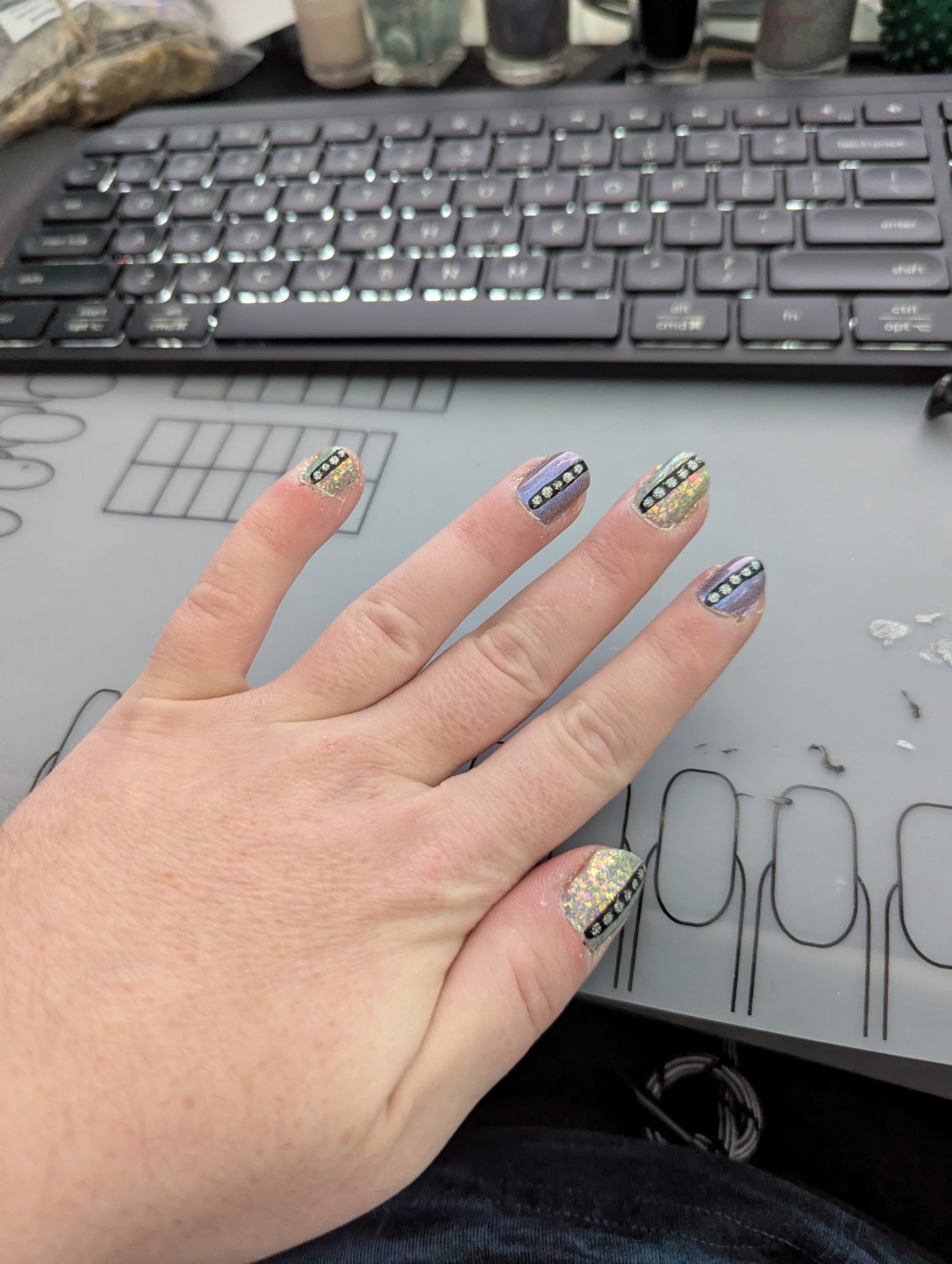
You made it to the end of the newsletter, and that means you get to see this week's nails! I wanted to aim for something subtle but sparkly this week. I'm feeling an urge to curl inwards and protect myself, and I wanted to find a combination that felt like it balanced the gentleness I needed this week with a little sparkly reminder not to hide away from the world. I'm fairly pleased with how it turned out.
Stay warm through the coming cold snap! Make sure you dress in layers, and that you overlap those layers at the joins. If I don't see you around town, I'll see you back here next week.