
All About The Commoners' Hour
Hey all! We're back to our regular format this week, and I've got loads to share, so lets dive right in:
Upcoming events
- The Money Out of Politics Drive-and-Sign event is this afternoon! From 3:30-5:30, you can drive through the Montague Farmer's Market to sign the Money Out of Politics petition! I'll be there helping to collect signatures, and I would love to see some of you come through the line.
- Tuesday, March 3rd from 5-7pm is the Common Ground discussion on how to maintain mental well-being when the world is being a giant dumpster fire. We'll be in the big meeting room at the White Lake Community Library, and snacks will be provided.

So, what's the deal with these tokens?
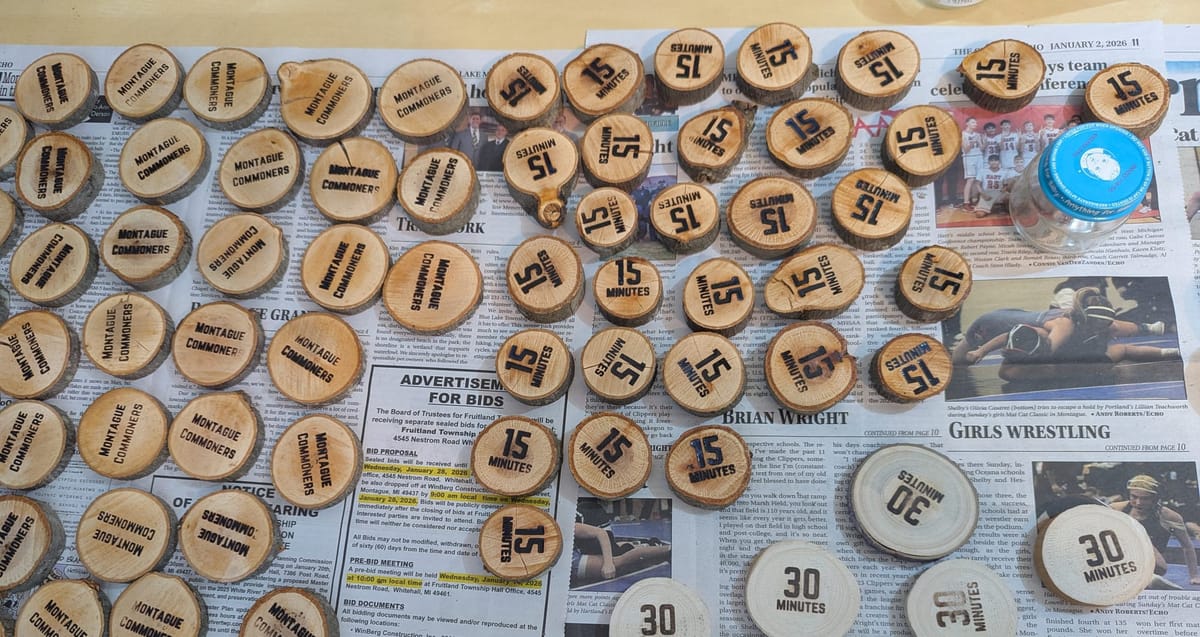
Simply put, the Commoners' Hour is a local barter currency that we use to reward folks who put work into Commoners projects and events. For every hour that you spend helping the Commons, you get an Hour token that you can spend on everything from baskets to maple syrup at the Montague Commoners shop.
We start by gathering pole-wood from the forest. We try to pick saplings growing in overcrowded areas where they're never going to be able to really thrive. We harvest the sapling, trim off the smaller branches to use as wildlife habitat or biochar feedstock, and cut the trunk and larger branches into 2-foot sections to dry. (This step happened last spring, and I forgot to take any pictures or video at the time, but we're hoping that once the snow melts a bit we can do a start-to-finish video of the tree harvesting process.)
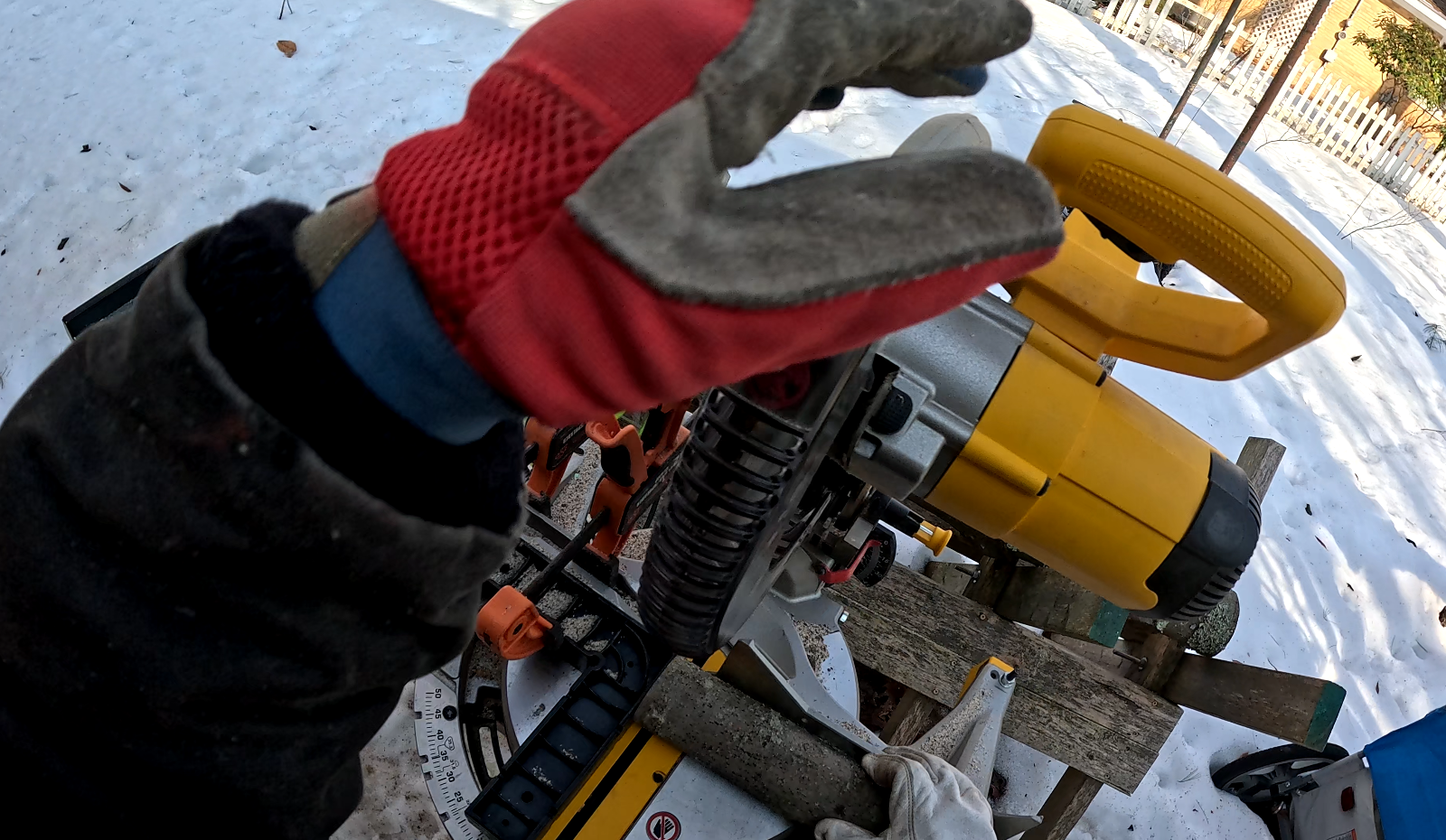
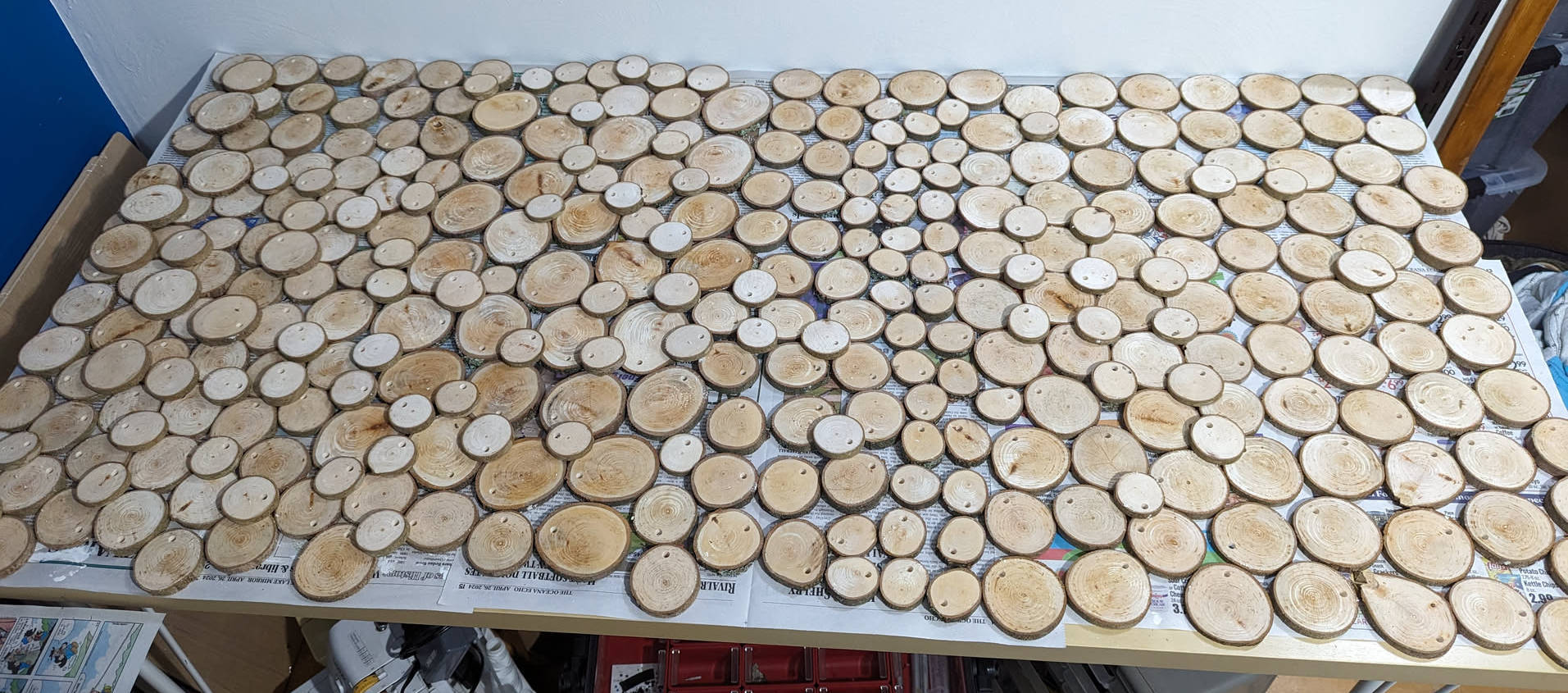
We leave the wood in the garage for a couple of months so that it can dry slowly, which reduces the risk of cracks forming in the wood. Then we get out the chop saw and slice the wood into discs about 1/4" thick. Because the trunks and branches naturally vary in size, this gets us a fairly broad variety of "wood cookies" that we can use for product labels, nametags, coasters, and just about anything else you might need a circle of wood for.
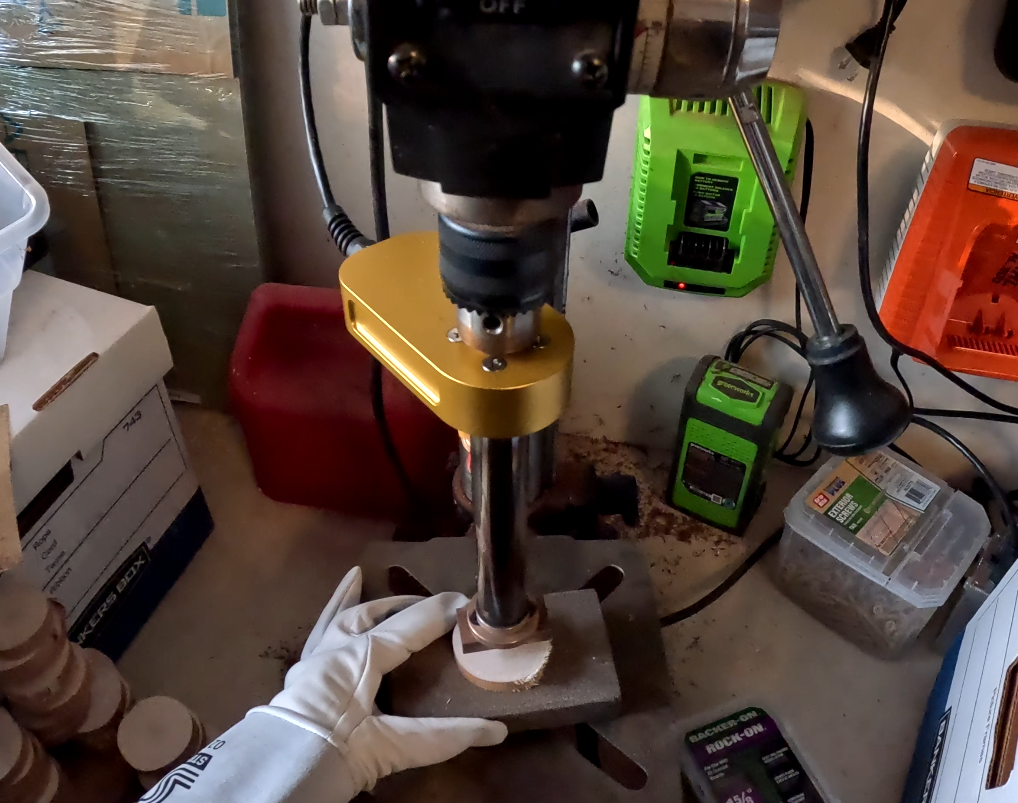
Next, I took all the wood cookies and used a woodburning stamp to apply the Montague Commoners logo onto one side. In previous rounds of tokens, I lost about a third of the wood cookies to uneven stamp impressions, because it's hard to cut them perfectly evenly, and one side of the wood cookie was often slightly thicker than the other. This time around, I realized that I could solve that by placing the wood cookie on a sanding sponge, so that the thick side could sink into the sponge a little and the thin side could make proper contact with the stamp. I still ended up with a couple of duds, but it brought the success rate of the stamping process from ~60% to ~95%, which I'm very happy about.
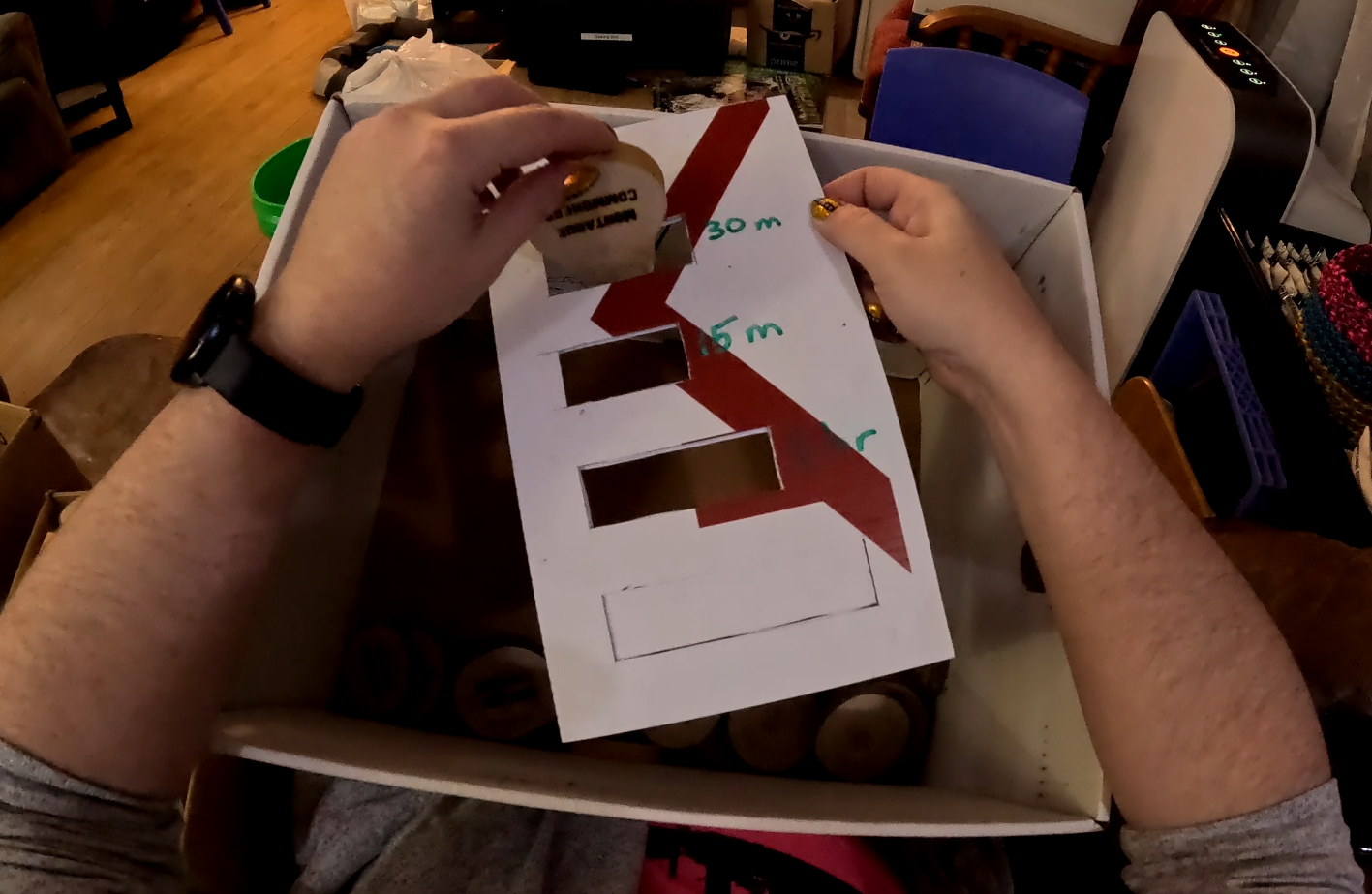
The next step was sorting the proto-tokens by size, so that they could get an appropriate denomination marking. To do this, I made a little slot-sizer out of a coroplast real estate sign. Next time, I want to make a set of sizers with one slot each, so that I can put them on top of separate containers and drop each token directly into the appropriate bucket, but this was a good first iteration.
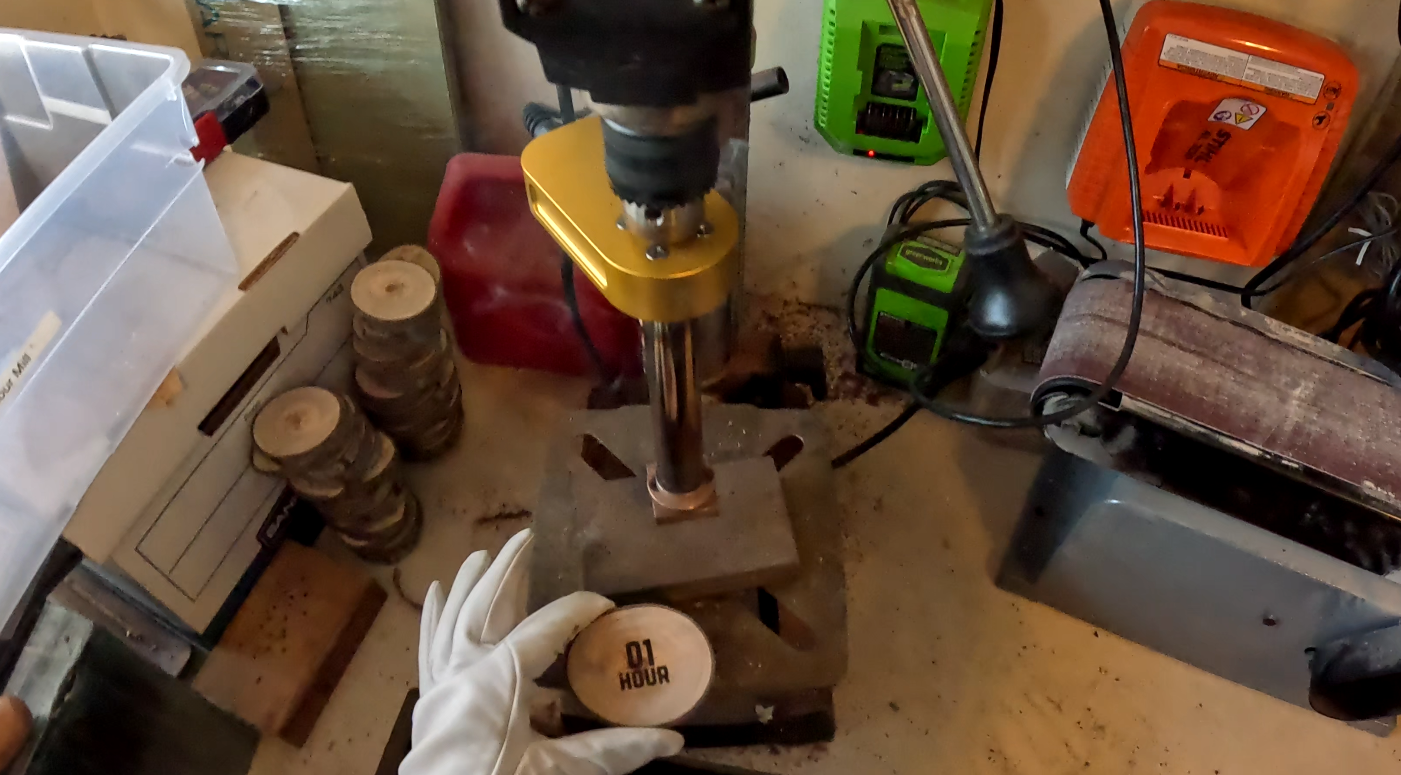
Next, it's back to the drill press to stamp on the denomination markings. The big ones get a "01 Hour" mark, the medium ones get "30 minutes", and the small ones get "15 minutes". (I'm hoping to make some "5 min" ones out of the very smallest wood cookies, but I haven't gotten around to ordering the stamps for those yet. They're made out of brass and I have to get them from a company that specializes in custom branding irons.)
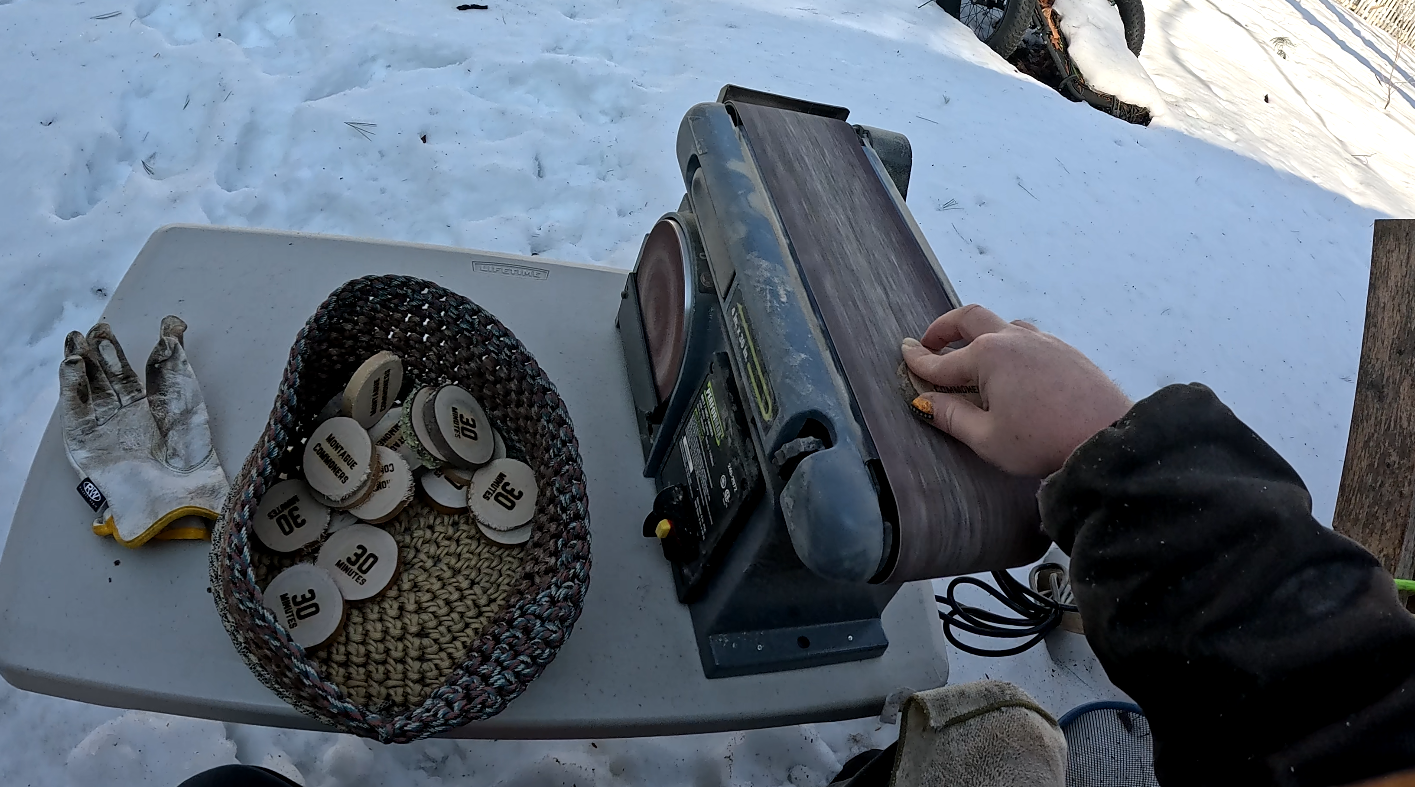
Once all the tokens have been fully stamped, it's time to smooth out the surface so that they can be painted. This got a LOT easier this batch because I finally gave in and bought a benchtop sander. I sanded the last batch with a little 1/4-sheet sander, and not only was it a very slow process, I could only do it for a couple of twenty minute sessions a day, or the vibration started messing with the nerves in my hands. The belt sander isn't entirely hand-safe (I got careless at one point and gave myself a nasty abrasion wound at the base of my thumb) but it goes much faster, and skin heals a lot faster than nerves do.
(I started out wearing work gloves, but the fingers of the gloves developed holes almost immediately, so I decided bare-handed caution was the way to go. If you have any ideas for a jig of some kind that would hold the tokens securely while keeping fingers away from the sanding belt, I'd love to hear about it.)
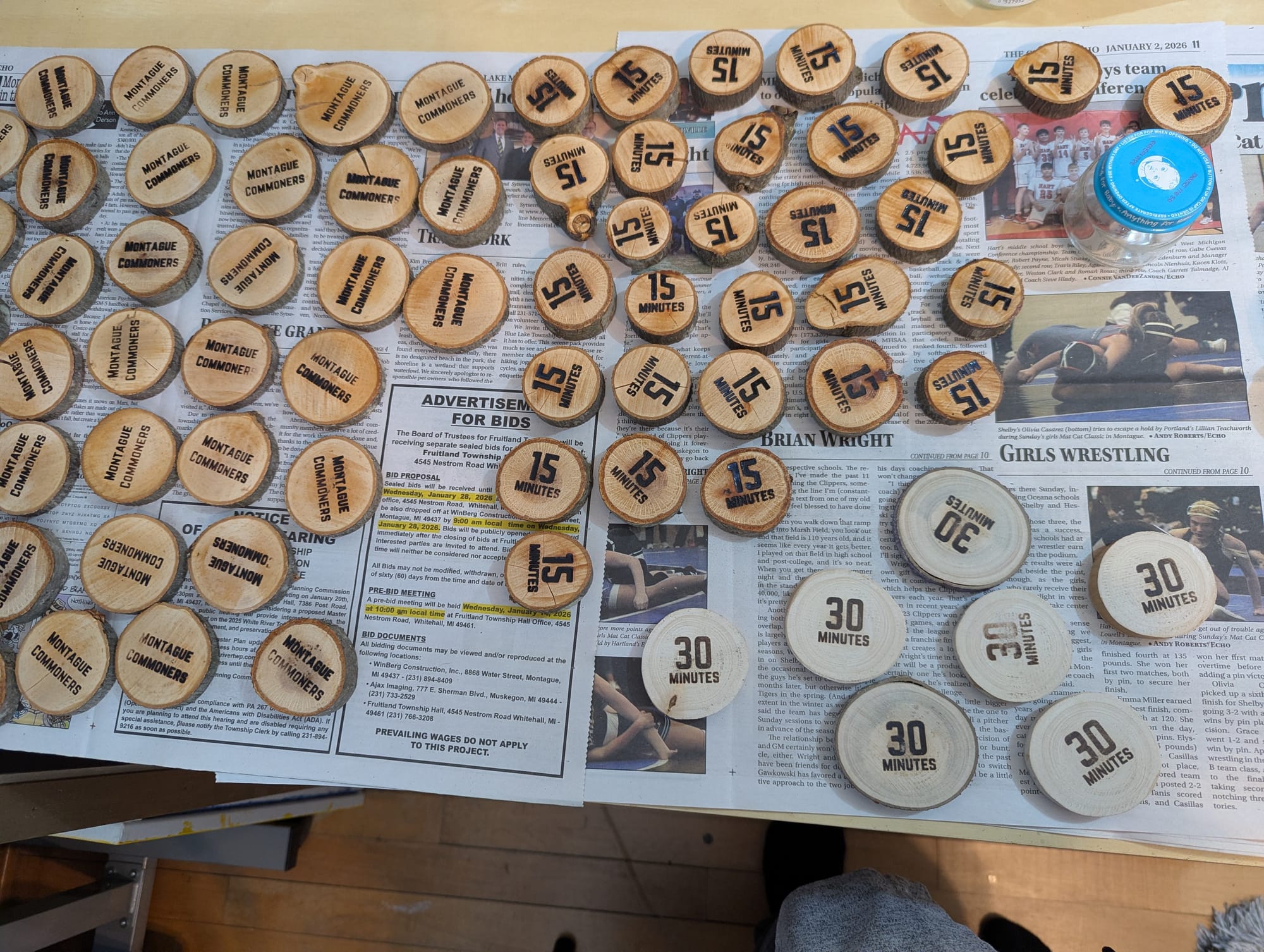
Finally, the tokens get a layer of acrylic artists' varnish to seal the wood and get it ready for painting. I don't usually do that step for product or name tags, because I want those to stay fully biodegradeable, but the tokens are intended for long-term use, so I figure a little acrylic is worth it to protect the efforts of our artists.
Speaking of which...
Call For Artists!
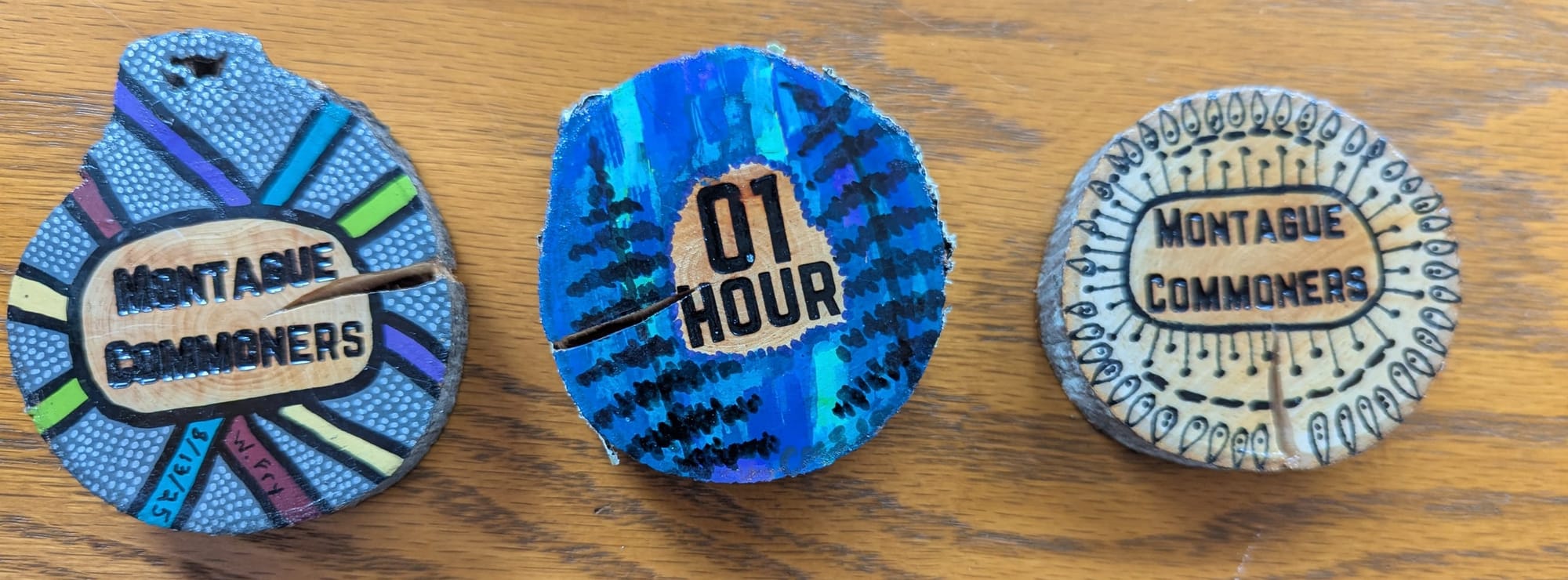
The blank tokens are pretty cool, but at the end of the day, they're just a piece of wood, and they only take about five minutes to make. What gives a finished Commoners' Hour token its value isn't the piece of wood, but the art that goes onto it.
Once the blank tokens are ready for painting, we distribute them to local artists, who set a timer for the "face value" of the token, and then see how ornately they can decorate the token in that amount of time. They can use pens, markers, or paintbrushes, and they're free to do whatever sort of design they'd like. There are only three rules:
- The wood-burned stamping on each side must remain visible
- The artist must spend the entire time actively working on the token
- The art on every token must be different
Once the artist has finished decorating their token, they can come spend it at the Montague Commoners shop. They can use it towards anything we sell at the shop, from bumper stickers to baskets, and even a few Hours-only items like maple syrup that aren't available for cash purchase.
So if you or someone you know might be interested in decorating some tokens for us, get in touch. We've got a couple hundred blank tokens ready to hand out, and I'd like to get a good chunk of them decorated before the Artisan Market starts up in May.
Recommendation Corner
I've been meaning to include this video in the last three newsletters, and I'm glad I'm finally remembering. The creator is an engineer from Illinois who went viral a few years ago for his excellent explanations of the ins and outs of dishwashers. In this video, he goes over some of the misinformation out there about solar panels, and explains the reality of the situation in the most midwestern way possible. The video's a little long, but it's well worth watching to the end.
This Week's Nails
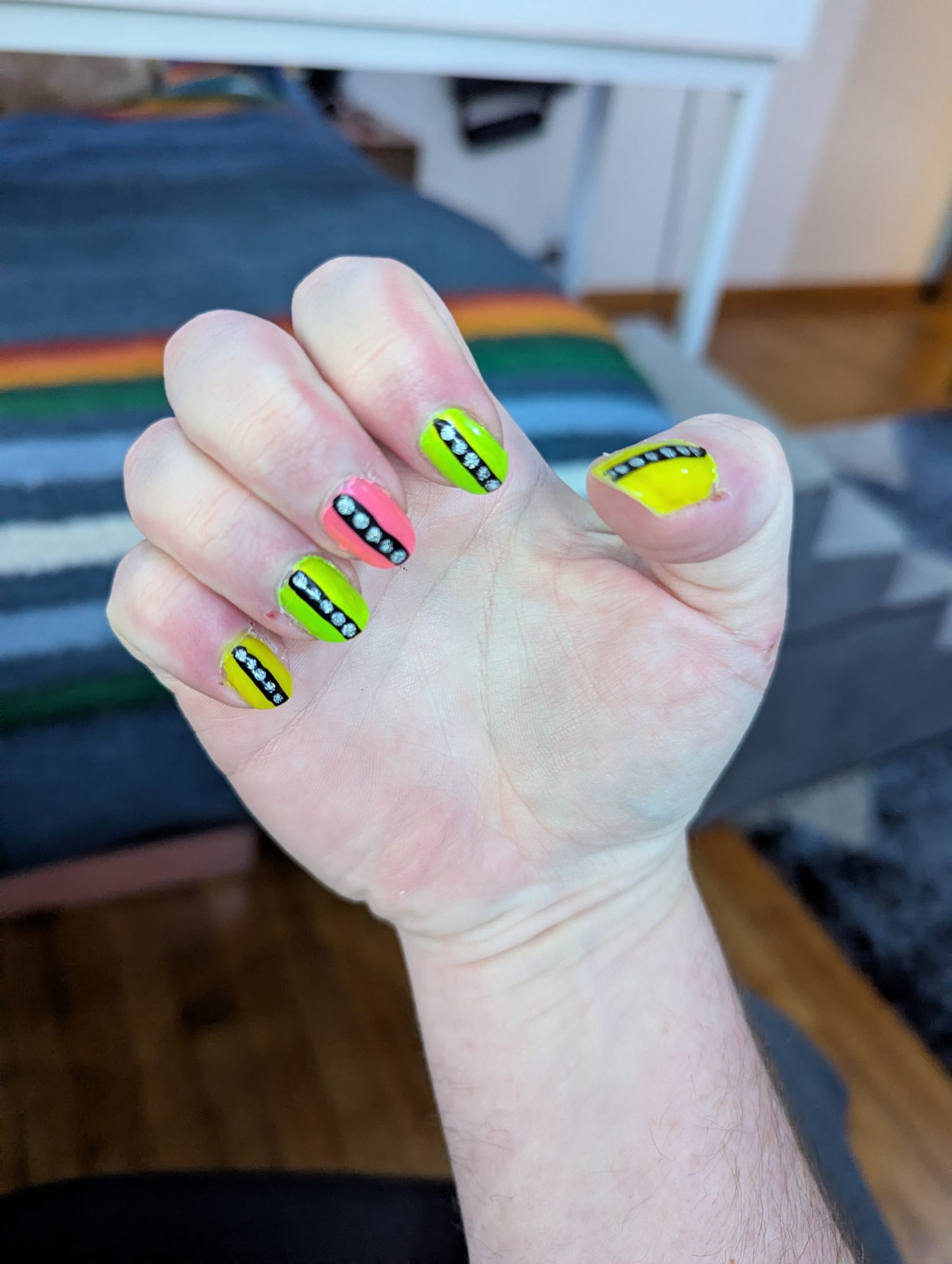
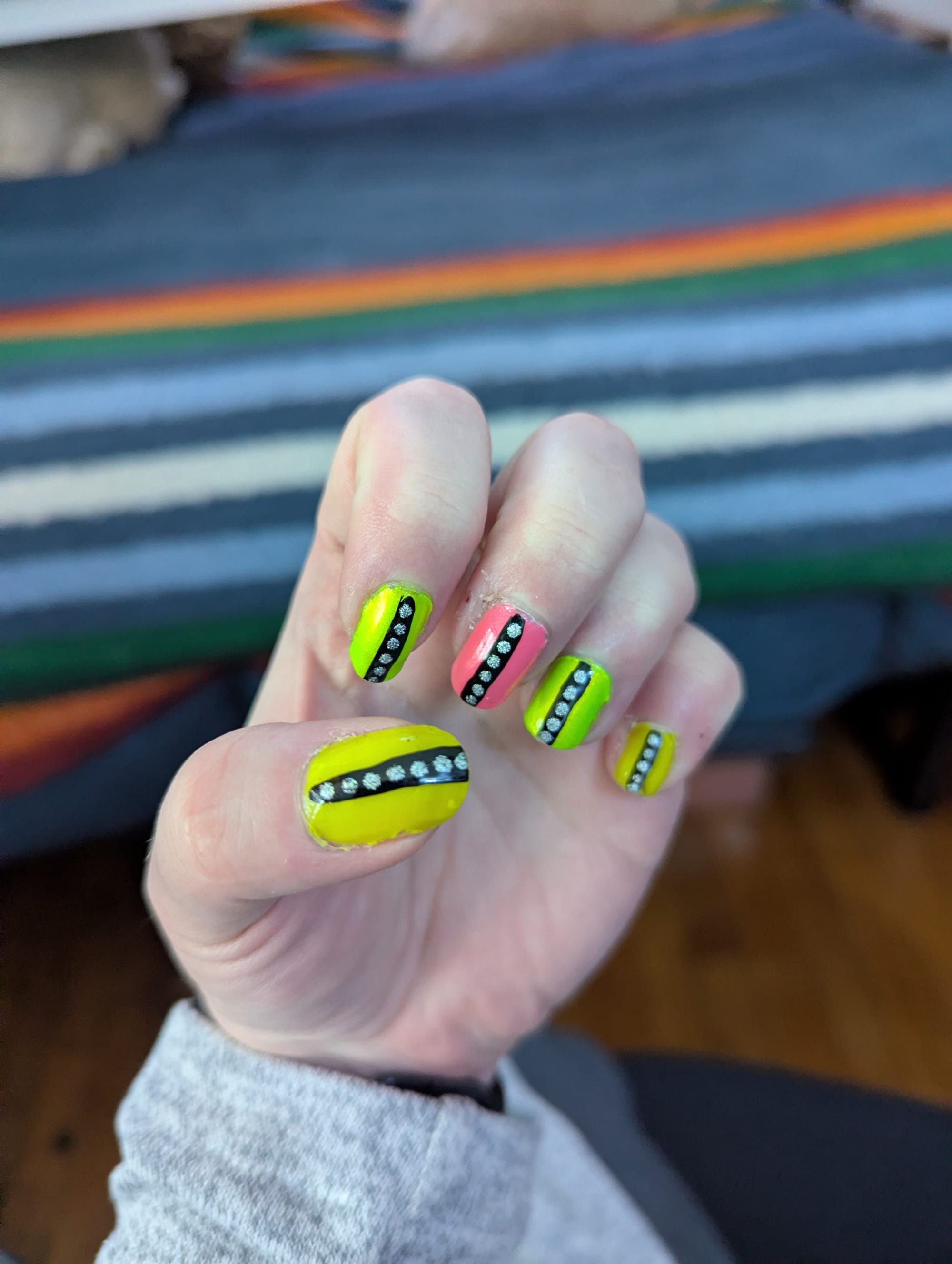
You made it to the end of the newsletter, and that means you get to see this week's nails! Decided to make it a neon week this week, in celebration of the skin on my thumb managing to close a 1/2" hole in only a little over a week. I'm probably going to end up with yet another scar on my hands, but I'll take that over being able to see my dermis any day of the week.
Hope to see you later today at the Drive-and-Sign, and if not I'll see you back here next week.